

How to Identify an Authentic Persian Rug
For centuries, Persian rugs have been considered the finest handwoven carpets in the world.…
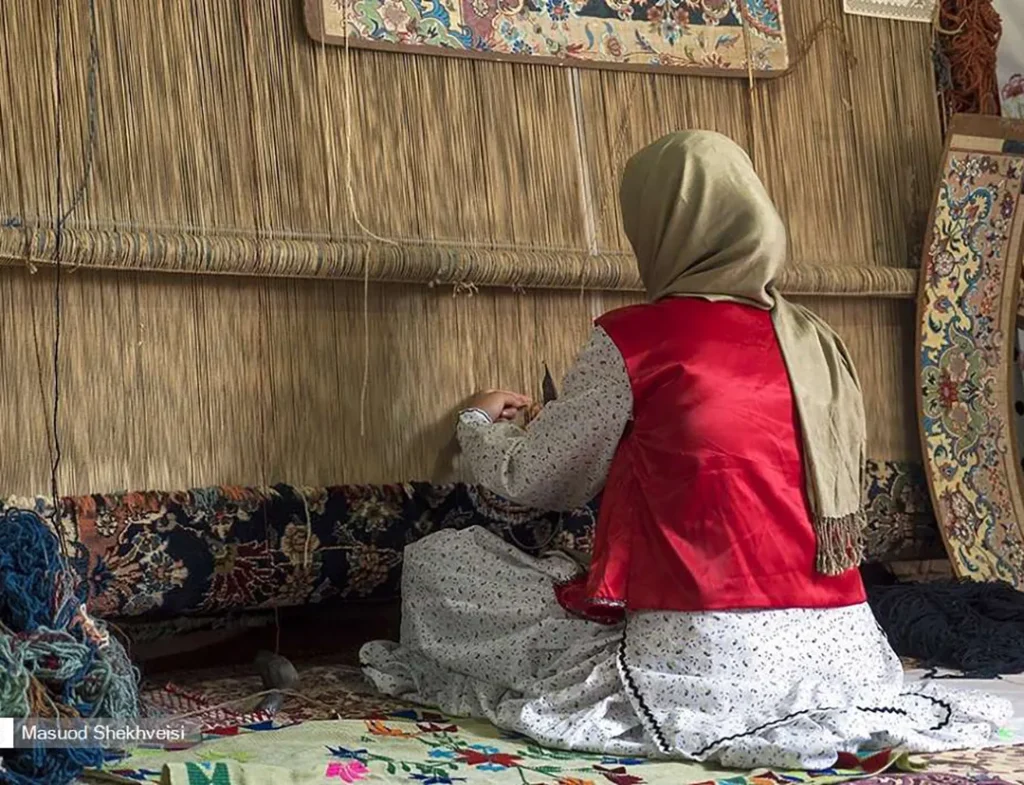
A genuine Persian rug is much more than a decorative floor covering. It is a handmade textile shaped by Iranian culture, regional weaving traditions, natural materials, and generations of skilled craftsmanship. For many buyers, however, the challenge is knowing how to distinguish a real Persian rug from a machine-made carpet or a Persian-style imitation.
At first glance, many rugs may look similar. They may include floral motifs, rich borders, central medallions, traditional colors, or detailed patterns. But when you know what details to inspect, the difference becomes much easier to recognize. The back of the rug, the fringe, the knot structure, the materials, the dyes, the design language, and even small handmade irregularities can all reveal whether a rug is truly authentic.
This guide explains the most important signs of authenticity so you can evaluate a Persian rug with more confidence, whether you are buying your first handmade rug, adding to a collection, or choosing a long-lasting piece for your home.
What Makes a Persian Rug Authentic?
In the strictest sense, a Persian rug is a rug woven in Iran. However, when collectors and serious buyers refer to an authentic Persian rug, they usually mean a hand-knotted rug made in Iran using traditional weaving methods. This distinction matters because the market also includes machine-made rugs, printed carpets, and rugs made in other countries using Persian-inspired designs.
An authentic handmade Persian rug usually has three important qualities: it is woven by hand, it reflects Iranian design heritage, and it is made from materials that can age beautifully over time. These qualities are what make Persian rugs valuable not only as decorative pieces, but also as lasting works of craftsmanship.
The best way to begin inspecting a Persian rug is not by looking only at the front. In many cases, the strongest clues are found when you turn the rug over and examine its structure.
1. Check the Back of the Rug
The back of a handmade Persian rug is one of the clearest indicators of authenticity. When you turn the rug over, the pattern should still be visible from the back. It may appear slightly less vibrant than the front, but you should be able to see the design formed through the structure of the knots.
In a hand-knotted rug, each knot is tied individually onto the foundation. Because of this, the back often shows small variations in spacing, alignment, and knot size. These irregularities are not defects. They are signs of human craftsmanship.
A machine-made rug, on the other hand, often looks too uniform on the back. It may have a synthetic mesh, glued fabric, latex backing, or a pattern that appears printed rather than woven. If the back looks covered, plastic-like, or mechanically perfect, the rug is unlikely to be a traditional hand-knotted Persian rug.
2. Look Closely at the Fringes
The fringe is another important detail. In an authentic hand-knotted Persian rug, the fringes are not separate decorative pieces added later. They are the ends of the warp threads that run through the entire foundation of the rug.
This means the fringe is structurally connected to the rug itself. If you follow the fringe into the body of the carpet, it should continue naturally into the weave.
Many machine-made or lower-quality rugs have fringes that are sewn, glued, or attached after production to imitate the look of a handmade rug. If the fringe looks like a separate trim added onto the edge, you should be cautious.
3. Feel the Materials: Wool, Silk, and Cotton
Materials play a major role in the quality and authenticity of a Persian rug. Traditional Persian rugs are commonly made with wool, silk, cotton, or a combination of these fibers. Many city rugs have a cotton foundation with a wool or silk pile, while some tribal and village rugs may use wool foundations.
High-quality wool should feel warm, resilient, and natural. It should not feel plastic, overly shiny, or lifeless. Good wool has strength and elasticity, allowing the rug to perform well over time while absorbing color beautifully.
Silk may be used in finer rugs or as highlights within a wool rug. It adds a subtle sheen and allows the weaver to create very fine details. A genuine handmade rug should also feel flexible. If the rug feels stiff, rubbery, brittle, or overly rigid, it may contain glue, synthetic backing, or machine-made construction.
4. Study the Colors and Dye Character
Color is one of the most memorable features of a Persian rug. Traditional Persian rugs often used natural dyes derived from plants, roots, minerals, and other organic sources. Modern handmade rugs may also use high-quality synthetic dyes, but the important point is to look for depth, harmony, and color stability.
One common feature in handmade rugs is subtle color variation, often known as abrash. This happens when wool from slightly different dye batches is used during the weaving process. Rather than being a flaw, abrash can add warmth, depth, and character to the rug.
Machine-made rugs often have colors that look flat, overly uniform, or printed. A real Persian rug usually has visual richness. The color may shift slightly depending on light, pile direction, and age. This depth is one of the reasons handmade Persian rugs feel different from mass-produced carpets.
5. Understand Regional Persian Rug Designs
Authentic Persian rugs usually carry a clear regional identity. They are not random decorative patterns. Each weaving region in Iran has developed its own design language, color palette, structure, and motifs.
Tabriz rugs are known for precision, refined floral designs, medallion layouts, pictorial scenes, and detailed drawing. Kashan rugs often feature elegant central medallions, rich red or blue fields, and balanced floral borders. Heriz rugs are recognized for bold geometric medallions, angular vines, strong construction, and village character. Nain rugs often include fine floral motifs, ivory or cream backgrounds, blue accents, and delicate detailing.
Tribal and village rugs may show more geometric shapes, symbolic motifs, and expressive irregularities. City rugs often display more formal symmetry and intricate floral detail. Neither style is automatically better. What matters is whether the design matches the rug’s claimed origin and whether the piece has artistic integrity.
6. Inspect the Shape and Handmade Irregularities
A handmade Persian rug often has small irregularities in shape, line, or symmetry. One side may be slightly wider than the other, or a border may not be perfectly identical from one end to the other. These details are normal in handwoven pieces, especially older, tribal, or village rugs.
The key is balance. Irregularities should feel natural, not structurally problematic. A handmade rug may not be perfectly machine-straight, but it should still feel harmonious, stable, and well constructed.
Perfect uniformity is not always a positive sign. If every knot, line, and repeated motif looks mechanically identical, the rug may be machine-made. Handmade beauty often lives in the subtle differences created by the weaver’s hand.
7. Examine the Knotting and Weave Quality
Knot count can influence detail and value, but it should never be the only factor you consider. A very fine city rug may have a high knot count and detailed drawing, while a durable village rug may have a coarser weave but still be highly valuable because of its strength, character, and design.
Instead of focusing only on numbers, look at the overall quality of the weave. Are the motifs clear? Are the borders balanced? Does the rug lie reasonably flat? Is the foundation strong? Does the pile feel secure? These practical details often matter more than a simple knot-count claim.
Be careful if a seller uses knot count as the only proof of value. Authenticity depends on several factors together: origin, handmade construction, materials, design, condition, and provenance.
8. Check for Signs of Machine-Made Rugs
Machine-made rugs can be attractive and practical, but they should not be sold as authentic hand-knotted Persian rugs. To avoid confusion, look for signs of machine production.
A machine-made rug may have an overly uniform back, synthetic fibers, attached fringes, a stiff feel, latex or glue underneath, or a design that appears printed rather than woven. The front may look sharp, but the back may look flat, unclear, or mechanically produced.
Also pay attention to wording. Terms such as “Persian style,” “Persian design,” or “Persian-inspired” do not necessarily mean the rug was woven in Iran. These phrases usually describe the pattern, not the origin or construction. If authenticity matters, ask whether the rug is hand-knotted and where it was made.
9. Consider Age, Condition, and Restoration
Age can add charm and value to a Persian rug, but age alone does not guarantee quality. A well-preserved semi-antique rug may be more desirable than an older rug with serious damage.
When evaluating an older rug, inspect the pile, edges, fringes, foundation, and repaired areas. Normal wear can be part of the character of an antique or vintage rug. However, large holes, weak foundations, heavy color bleeding, severe moth damage, or poor restoration can reduce both beauty and value.
Professional restoration can be acceptable when done carefully and respectfully. But obvious, low-quality repairs should be considered carefully before purchase. If a rug is described as antique, rare, or collectible, documentation and provenance can add confidence.
10. Ask the Right Questions Before Buying
A reliable rug seller should be able to answer basic questions clearly. Before buying, ask where the rug was woven, whether it is hand-knotted, what materials were used, whether the dyes are natural or synthetic, whether it has been repaired, and whether there is any information about its age or origin.
If you are buying online, ask for photos of the back, fringes, edges, pile, and any worn or repaired areas. Clear photos and honest descriptions protect both the buyer and the seller.
At Arghavan Rugs, each handmade rug is selected with attention to craftsmanship, design, condition, and authenticity. Whether you are looking for a refined Nain rug, a bold Heriz rug, a classic Tabriz carpet, or an antique Persian piece, understanding these details helps you choose with confidence.
Quick Checklist: How to Tell If a Persian Rug Is Real
- Turn the rug over and check whether the pattern is visible on the back.
- Look for individual knots and slight handmade irregularities.
- Make sure the fringes are part of the foundation, not sewn on separately.
- Avoid rugs that feel plastic, rubbery, overly stiff, or synthetic.
- Look for depth of color, natural variation, and balanced tones.
- Compare the design with known Persian weaving regions such as Tabriz, Kashan, Heriz, Nain, Isfahan, Qom, Shiraz, or Mashad.
- Check the edges, ends, pile, and foundation for condition issues.
- Ask the seller about origin, materials, age, repairs, and provenance.
- Be cautious with vague terms such as “Persian style” or “Persian-inspired.”
- Buy from a reputable seller who provides clear photos and honest information.
Final Thoughts
Learning how to identify an authentic Persian rug is not about memorizing one simple rule. It is about understanding the relationship between craftsmanship, origin, materials, design, condition, and age.
A real Persian rug reveals itself through details: the knots on the back, the natural continuation of the fringes, the feel of wool or silk, the depth of color, and the cultural identity of the pattern.
The more you study these details, the easier it becomes to see the difference between a handmade Persian rug and a mass-produced imitation. Authentic Persian rugs have a presence that cannot be fully copied by machines. They carry the time, skill, and artistic heritage of the weavers who made them.
Whether you are choosing a rug for a living room, dining room, bedroom, office, or private collection, an authentic Persian rug offers more than decoration. It brings history, texture, warmth, and lasting character into your space.
Explore Arghavan Rugs to discover handmade Persian rugs selected for beauty, quality, and timeless design.
FAQ
How can I tell if a Persian rug is handmade?
Turn the rug over and look at the back. In a handmade Persian rug, the design should be visible from the back and formed through individual knots. Slight irregularities are also normal and often indicate hand craftsmanship.
Are all Persian rugs handmade?
No. Some rugs may be machine-made with Persian-style designs. For authenticity, look for a hand-knotted rug woven in Iran and ask the seller about the rug’s origin, construction, and materials.
Are fringes a sign of an authentic Persian rug?
Fringes can be a helpful sign only when they are part of the rug’s foundation. In a true hand-knotted rug, the fringes are extensions of the warp threads. If they are sewn or glued on separately, the rug may not be handmade.
Do authentic Persian rugs always use natural dyes?
Not always. Many traditional and older Persian rugs use natural dyes, but some genuine handmade Persian rugs use high-quality synthetic dyes. The most important factors are color depth, harmony, stability, origin, materials, and weaving method.