

Difference Between , Indian, Turkish, and Persian Rugs
When it comes to handmade rugs, three names are mentioned more than any others:…
AUTHENTIC PERSIAN RUGS COLLECTION
When it comes to handmade rugs, three names are mentioned more than almost any others: Persian, Turkish, and Indian rugs. For many buyers, especially those who are new to fine handmade carpets, the difference between Persian, Turkish, and Indian rugs is not always obvious at first glance. All three can feature rich colors, detailed borders, traditional motifs, and skilled handwork.
However, when you look more closely, their origins, knotting techniques, materials, design language, and long-term value can be very different.
Persian rugs, Turkish rugs, and Indian rugs each come from respected weaving traditions. Persian rugs are rooted in the artistic heritage of Iran and are often considered one of the foundations of classical rug design. Turkish rugs, also known as Anatolian rugs, are strongly connected to Ottoman, village, and tribal weaving culture, often recognized for bold geometry and symbolic patterns. Indian rugs, especially those influenced by the Mughal period, often reflect Persian-inspired designs adapted for international markets.
Because all three can be handmade and visually beautiful, buyers often compare Persian rugs vs Turkish and Indian rugs before making a decision. This comparison matters not only for style, but also for quality, durability, authenticity, and investment potential. A rug is more than a decorative piece; it can be a work of art, a cultural object, and a long-lasting part of a home.
In this guide, we will explore the key differences between Persian, Turkish, and Indian rugs by looking at their history, weaving techniques, patterns, materials, craftsmanship, and lasting value. By the end, you will have a clearer understanding of how to identify authentic Persian rugs and why genuine Persian pieces continue to stand out among collectors, designers, and serious rug buyers.
Origins and Weaving Traditions
Persian Rugs
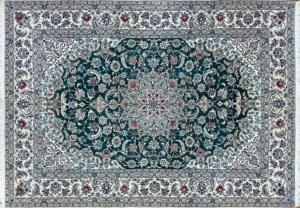
Persian rugs originate from Iran, historically known as Persia, and represent one of the most refined rug-making traditions in the world. For centuries, Persian weavers have developed regional styles that are instantly recognizable to experienced collectors. Tabriz rugs are admired for intricate pictorial and floral designs, Kashan rugs for elegant central medallions, Heriz rugs for bold geometric compositions, and Nain rugs for delicate patterns often enhanced with silk accents.
What makes Persian rugs especially important is the balance between artistic beauty and technical precision. Many Persian rugs are hand-knotted with close attention to symmetry, proportion, color harmony, and detail. City rugs often showcase highly refined designs, while tribal and village rugs reflect local identity, personal expression, and generations of inherited weaving knowledge.
Persian rugs are not only floor coverings. They are cultural works of art that carry history, symbolism, and craftsmanship. This is one of the main reasons authentic Persian rugs are highly valued in homes, galleries, and private collections around the world.
Turkish Rugs
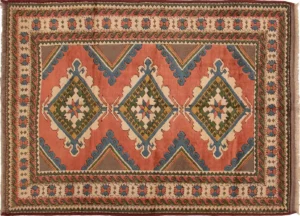
Turkish rugs, often called Anatolian rugs, come from a rich weaving tradition shaped by Ottoman, nomadic, and regional influences. Compared with many Persian city rugs, Turkish rugs often place more emphasis on bold geometric structure, strong color contrast, and symbolic tribal motifs. Common design elements include medallions, stars, diamonds, hooks, and repeated patterns that reflect protection, family, daily life, and cultural identity.
One of the most important features of Turkish rugs is the use of the symmetrical Turkish knot, also known as the Ghiordes knot. This knot creates a strong and durable structure, making many Turkish rugs practical for areas with regular foot traffic. While Turkish rugs may not always have the same level of curving detail found in fine Persian rugs, they are appreciated for their strength, clarity, and decorative impact.
For buyers comparing Persian rugs vs Turkish rugs, the main difference is often artistic direction. Persian rugs usually focus on fine detail, flowing patterns, and layered design, while Turkish rugs often feel bolder, more geometric, and more tribal in character.
Indian Rugs
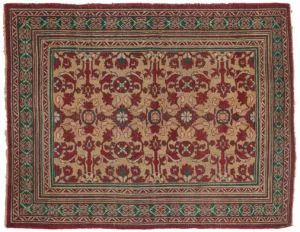
Indian rug weaving has a long and respected history, especially after Persian weaving techniques influenced India during the Mughal period. Many Indian rugs feature medallions, floral borders, vines, and layouts inspired by Persian designs. Because of this influence, Indian rugs can sometimes look similar to Persian rugs at first glance.
However, the purpose and production context are often different. Many Indian rugs were historically developed for export markets, meaning designs were frequently adapted to suit international preferences. Some high-end Indian rugs are beautifully hand-knotted and made with quality wool or silk, but many commercial Indian rugs use lower knot density, more simplified patterns, or materials selected for affordability rather than long-term collectible value.
When comparing Persian rugs vs Indian rugs, the key difference is usually refinement and cultural originality. Indian rugs can be attractive and decorative, but genuine Persian rugs often offer greater depth in design, stronger regional identity, and higher long-term value.
Understanding these regional traditions helps buyers choose a rug with confidence. Each origin has its own beauty, but Persian rugs remain especially admired for their artistic heritage, technical skill, and lasting cultural significance.
Knot Structure and Weaving Technique
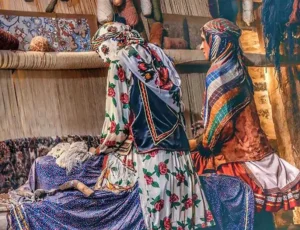
One of the most reliable ways to differentiate Persian, Turkish, and Indian rugs is by examining their knot structure and weaving technique. The knot is the fundamental building block of a handwoven rug, and subtle differences in how knots are tied can reveal a great deal about origin, quality, and durability.
Persian Rugs
Persian rugs typically use the asymmetrical or Persian knot, also known as the Senneh knot. This knot allows for extremely fine detail and intricate patterns, making it ideal for floral designs, pictorial scenes, and complex medallions. High-quality Persian rugs often have very high knot densities, which gives them their characteristic precision and elegance.
Turkish Rugs
Turkish rugs are generally tied with the symmetrical or Ghiordes knot, which produces a robust and durable structure. While this knot is slightly less flexible for extremely fine detailing compared to the Persian knot, it provides strength and longevity. This is why many Turkish rugs, particularly tribal and Anatolian pieces, can withstand heavy foot traffic and maintain their shape for decades.
Indian Rugs
Indian rugs, especially those made for export, often imitate Persian knotting but at lower densities. The craftsmanship varies significantly depending on whether the rug is intended for high-end collectors, decorative interiors, or broader international markets. Some fine Indian rugs use silk or quality wool with careful knotting, but many commercial pieces are less intricate than traditional Persian examples.
Understanding knot types and weaving methods not only helps identify a rug’s origin, but also gives insight into its quality, durability, and investment potential. A simple flip to the back of the rug can often reveal whether it is a genuine handwoven piece or a machine-made imitation.
Design and Patterns
Persian Rugs
Persian rugs are famous for their extraordinary variety and refinement in design. City rugs from Tabriz, Kashan, Isfahan, Qom, and Nain often include central medallions, detailed floral motifs, arabesques, hunting scenes, garden layouts, and carefully balanced borders. These patterns are usually created with a strong sense of proportion, rhythm, and harmony.
Persian rug designs often carry symbolic meaning. Flowers, vines, animals, trees, and architectural elements may represent beauty, paradise gardens, protection, or spiritual ideas. Even when a design is decorative, it usually reflects a deeper artistic tradition.
Tribal Persian rugs have a different but equally meaningful character. They may use geometric shapes, bold colors, and symbolic motifs passed down through families and communities. This combination of city refinement and tribal authenticity gives Persian rugs a wide design range that appeals to both traditional and modern interiors.
For buyers looking for the best handmade rug for long-term value, this design depth is one of the strongest advantages of Persian rugs. A genuine Persian rug can serve as a centerpiece in a room while also holding cultural and artistic importance.
Turkish Rugs
Turkish rugs are known for strong geometry, symbolic motifs, and clear visual structure. Anatolian rugs often feature diamonds, hexagons, medallions, stars, and repeated tribal forms. These designs create a bold and timeless look that works well in rustic, bohemian, traditional, and contemporary interiors.
Compared with Persian rugs, Turkish patterns are often more spacious and less intricate. This gives them a direct, graphic quality. Their designs can feel powerful, honest, and deeply connected to village and nomadic weaving traditions.
For someone choosing between Persian rugs and Turkish rugs, the decision often comes down to taste. If you prefer bold geometry and strong tribal character, a Turkish rug may be appealing. If you prefer fine detail, elegant floral work, and layered artistry, a Persian rug is often the stronger choice.
Indian Rugs
Indian rugs often borrow from Persian design language, especially floral medallions, scrolling vines, and Mughal-inspired layouts. Some Indian rugs are visually impressive and can bring warmth and elegance to a room. However, many Indian rugs made for export are designed to satisfy broad market demand rather than express a specific regional weaving identity.
This does not mean Indian rugs lack quality. Some are very well made. But when comparing Indian rugs inspired by Persian designs with genuine Persian rugs, the difference is often found in subtlety, originality, and depth. Persian patterns tend to feel more balanced, more detailed, and more connected to a long regional tradition.
A buyer who wants a decorative rug may be satisfied with a well-made Indian rug. A buyer who values heritage, authenticity, and collectibility will often find Persian rugs more meaningful.
Understanding these design distinctions helps buyers appreciate not only aesthetic differences, but also cultural significance. While all three types can be beautiful, the artistry and historical depth in Persian rugs often place them in a class of their own, especially for collectors and serious buyers.
Materials, Quality, and Why Persian Rugs Lead
When comparing Persian, Turkish, and Indian rugs, materials and craftsmanship are just as important as design. A beautiful pattern is valuable only when it is supported by quality fibers, careful dyeing, and skilled weaving.
Materials
High-quality Persian rugs are often made from durable wool with excellent texture and dye absorption. Many fine Persian rugs also include silk highlights, especially in detailed city rugs from regions such as Qom, Nain, and Isfahan. Natural dyes are commonly valued because they create rich, harmonious colors that age beautifully over time.
Turkish rugs also frequently use strong wool, particularly in tribal and village pieces. Their materials are often selected for durability and practical use, making many Turkish rugs excellent choices for functional spaces.
Indian rugs vary widely in material quality. Some high-end pieces use fine wool or silk, but many export-focused rugs rely on commercial-grade wool, chemical dyes, or production methods that prioritize affordability. These choices can affect softness, color depth, durability, and long-term value.
Craftsmanship
Persian rugs are respected for the level of craftsmanship involved in their creation. Fine Persian weavers pay close attention to knotting, design balance, color transitions, borders, and finishing. In many regions, weaving knowledge is passed down through generations, giving each rug a connection to family, place, and tradition.
Turkish rugs are also admired for strong construction and practical durability. Their symmetrical knotting technique supports long-lasting use, especially in tribal and Anatolian rugs.
Indian rugs can show excellent craftsmanship at the higher end of the market, but quality varies significantly. Some rugs are carefully hand-knotted, while others are produced in larger quantities for international buyers. This variation makes it important to inspect each rug closely before purchasing.
Durability and Value
A genuine Persian rug is built to last. With proper care, an authentic Persian rug can remain beautiful for generations. The combination of strong wool, refined weaving, balanced design, and quality dyes gives Persian rugs their lasting appeal.
Over time, Persian rugs often develop a soft patina that enhances their character. Rather than looking old in a negative way, a well-preserved Persian rug can become more beautiful as its colors mellow and its texture gains depth. This is one reason Persian rugs are often considered valuable investments as well as decorative pieces.
Turkish rugs can also be highly durable, especially for everyday use. Indian rugs can be practical and attractive, but their long-term value depends heavily on the quality of the individual piece.
In short, while Turkish and Indian rugs can both be beautiful, Persian rugs lead the world in artistry, refinement, cultural heritage, and lasting value. Their unmatched combination of materials, craftsmanship, design, and history makes a true Persian rug more than a home accessory. It becomes a centerpiece of elegance, identity, and tradition.
If you are deciding between Persian rugs vs Turkish and Indian rugs, consider what matters most to you: bold geometry, decorative affordability, or timeless craftsmanship. For buyers who want authenticity, artistic detail, and long-term value, an authentic Persian rug remains one of the finest choices in the world of handmade rugs.