

HOW MUCH IS MY PERSIAN CARPET WORTH?
If you’ve ever found yourself asking, “How much is my Persian carpet worth?” you’re…
HAND-KNOTED PERSIAN CARPET COLLECTIONS
If you’ve ever found yourself asking, “How much is my Persian carpet worth?” you’re not alone. Many people inherit a rug from parents or grandparents, discover one tucked away in storage, or purchase a handmade Persian rug years ago without knowing its current market value.
The truth is that Persian carpet valuation is not based on one simple factor. A handmade Persian rug can be worth a modest amount, several thousand dollars, or significantly more depending on its origin, age, materials, condition, rarity, design, and craftsmanship.
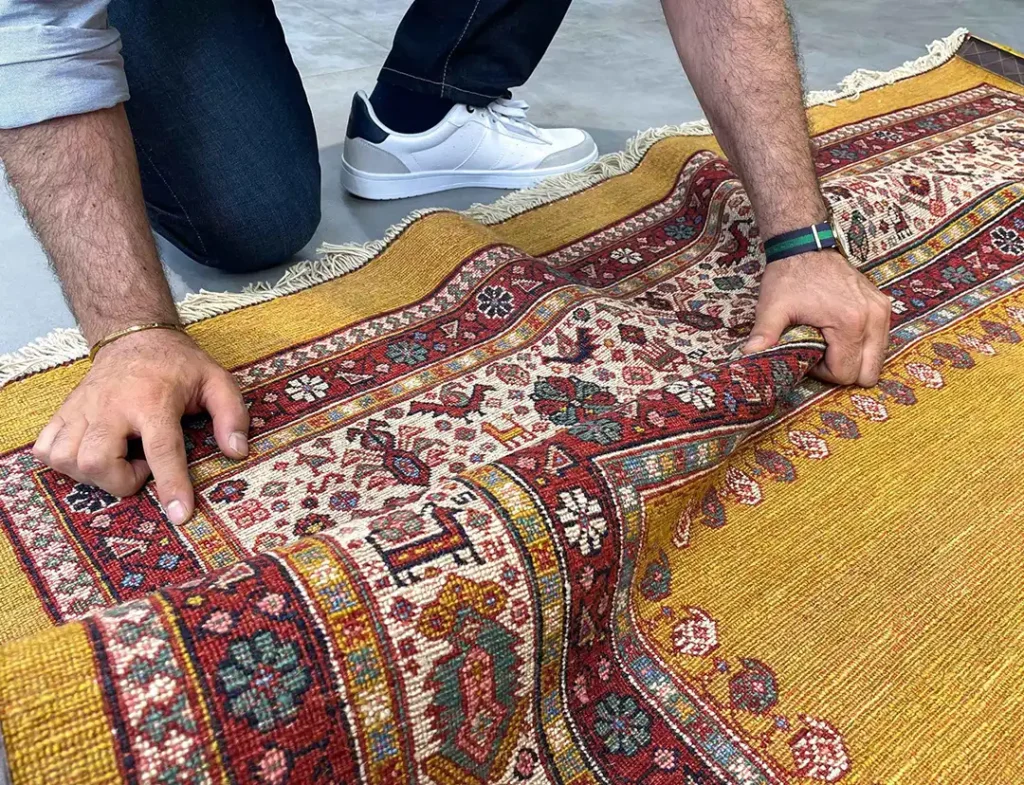
Unlike machine-made carpets, authentic Persian rugs are woven by hand and often carry cultural, artistic, and historical value. Some are decorative floor coverings, while others are collectible pieces with investment potential. To understand the value of your Persian carpet, you need to look at the rug the same way an expert appraiser would: carefully, patiently, and from multiple angles.
Below are the most important factors that help determine how much your Persian carpet is worth.
Age Matters: Antique, Semi-Antique, or Contemporary?
One of the first questions experts ask when evaluating a Persian carpet is simple: how old is it? Age plays an important role in determining carpet worth, but it is often misunderstood. Many people assume that older automatically means more valuable. While that can be true in some cases, age alone does not guarantee high value.
In general, a Persian carpet is considered antique if it is around 80 to 100 years old or more. Antique pieces, especially those from well-known weaving centers such as Tabriz, Kashan, Isfahan, or Heriz, can command significant prices — particularly if they are in good condition and retain their original colors and structure.
Antique rugs often feature natural dyes and older wool qualities that are highly prized by collectors.
A semi-antique Persian carpet typically ranges from 20 to 80 years old. These rugs can still hold strong market value, especially if they were produced during periods known for high craftsmanship. In many cases, a well-preserved semi-antique rug may have greater carpet worth than a damaged antique piece.
Contemporary Persian carpets, while newer, should not be dismissed. High-quality modern workshop pieces with fine knot density, silk highlights, and excellent materials can also be valuable, especially when they represent traditional designs executed with precision.
Ultimately, age contributes to value, but condition, craftsmanship, and demand matter just as much when determining true carpet worth.
Knot Density and Craftsmanship
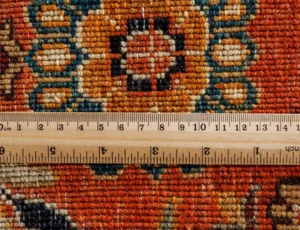
When determining the true carpet worth of a Persian carpet, knot density and craftsmanship are absolutely critical. In fact, for many collectors and professionals, this is where the real story begins.
Knot density refers to how many knots are tied within a specific measurement, usually per square inch or per square meter. A higher knot count typically allows for finer detail, smoother curves, and more intricate patterns. This is why cities like Tabriz, Isfahan, and Nain are often associated with highly valuable rugs;
their weavers are known for extremely precise, tight knotting.
However, knot density alone does not define quality. What truly elevates a Persian carpet is the skill behind those knots. Are the lines crisp and balanced? Is the design symmetrical? Do the floral motifs flow naturally, or do they appear stiff and mechanical? Master weavers create harmony within complexity, and that harmony directly impacts carpet worth.
Another key factor is consistency. When you examine the back of a Persian carpet, the knots should appear even and uniform. Irregular tension, uneven rows, or distorted shapes can reduce value. Fine craftsmanship ensures that the rug lies flat, maintains structure, and ages beautifully over time.
In short, while materials and age matter, the hands that tied the knots ultimately define the quality. A well-crafted Persian carpet with balanced proportions and refined execution will always stand stronger in the market and in long-term value than a rug that simply has a high knot count without artistic control.
Materials and Natural Dyes
Another major factor that influences carpet worth is the quality of materials used in a Persian carpet. Even the most beautiful design cannot reach its full potential if the foundation and fibers are ordinary.
Traditional Persian carpets are woven with high-quality wool, silk, or a combination of both. The finest wool often comes from regions with harsh climates, where sheep develop thicker, stronger fibers. This wool is rich in natural oils, giving the carpet durability, softness, and a subtle sheen. Over time, it develops a beautiful patina rather than wearing out.
Silk, on the other hand, adds refinement and luxury. Some Persian carpets are fully silk, while others incorporate silk highlights in floral motifs or outlines. These silk details reflect light, creating depth and movement in the design. Rugs woven with silk, especially from cities like Qom or Isfahan, typically have higher carpet worth due to their delicacy and labor intensity.
Natural dyes are equally important. Older Persian carpets were colored using plant-based and mineral dyes derived from sources like madder root, indigo, walnut husk, and pomegranate skin. These dyes produce rich, complex tones that age gracefully. Unlike synthetic dyes, natural colors soften over time and create that unmistakable antique glow collectors admire.
If a Persian carpet is made with high-grade wool, silk accents, and natural dyes, its durability and visual depth increase significantly. These elements not only enhance beauty but also protect long-term value, making materials one of the strongest contributors to overall carpet worth.
Final Thoughts on Persian Carpet Worth
So, how much is your Persian carpet worth? The honest answer is: it depends. But now you know exactly what those “depends” factors are.
The carpet worth of a Persian piece is shaped by a combination of origin, age, condition, knot density, materials, dyes, rarity, and market demand. A handmade Persian carpet is not a factory product with a fixed price tag; it is a work of art, and like any artwork, its value is layered and nuanced.
Some carpets are valuable because they are rare antiques from the Safavid era. Others hold strong value because they come from prestigious weaving centers like Tabriz, Kashan, Isfahan, or Heriz. Some pieces stand out due to extraordinary craftsmanship or silk detailing, while others gain worth through provenance, especially if they carry a weaver’s signature or documented history.
At the same time, emotional value often exceeds market price. A Persian carpet passed down through generations may not break auction records, but its cultural and personal significance can be priceless.
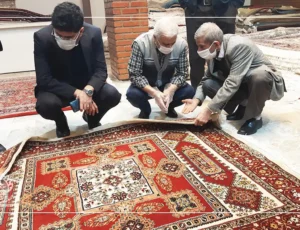
If you truly want to understand your Persian carpet worth, the best step is a professional appraisal by a trusted expert who specializes in handmade carpets. Clear photographs, measurements, and details about materials and origin can also help determine a realistic estimate.
In the end, a Persian carpet is more than an object on the floor. It is history woven into wool and silk, tradition tied knot by knot. Whether your carpet is a museum-worthy antique or a well-crafted modern piece, its value lies in both its craftsmanship and the story it carries, and that is what makes Persian carpets timeless.