

The 5 Most Expensive Rugs Ever Sold at Auction
Luxury collectors don’t just buy carpets they acquire history, culture, and museum-level artistry. Below…
Article Guide
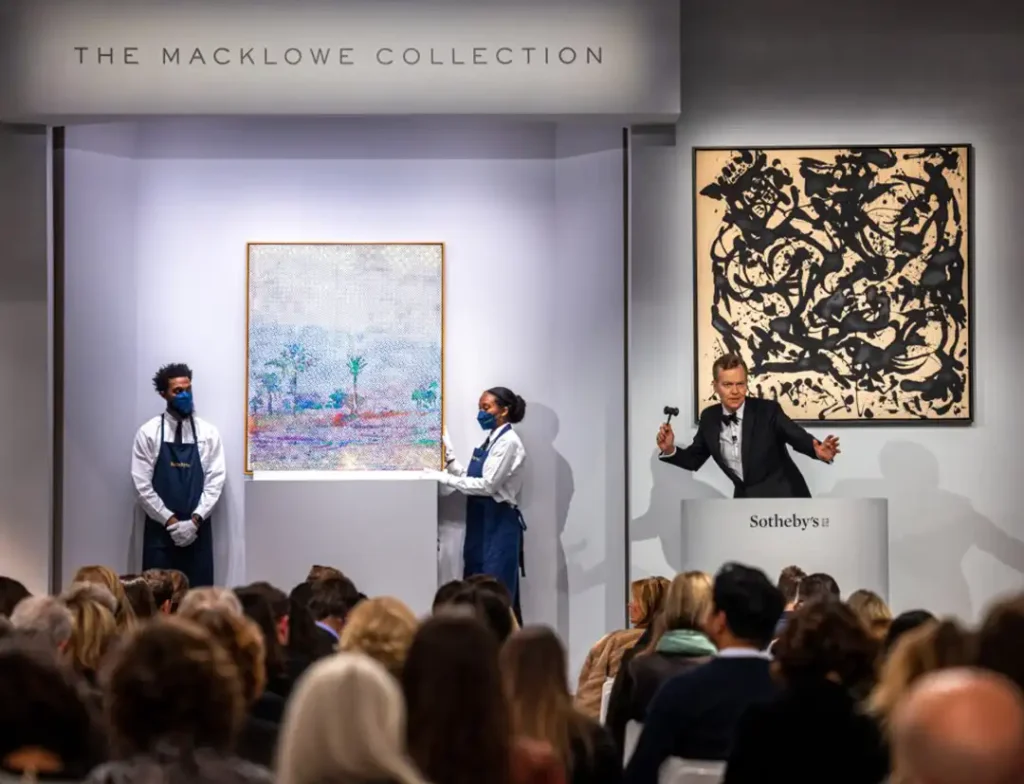
HAND-KNOTED PERSIAN CARPET COLLECTIONS
Luxury collectors don’t just buy carpets — they acquire history, culture, and museum-level artistry. Below are some of the most expensive rugs ever sold at public auction, including extraordinary Persian, Mughal, and imperial carpets that have reached multimillion-dollar prices.
The 5 Most Expensive Rugs in the World Ever Sold at Auction
The world’s most valuable rugs are not expensive simply because they are old. The highest auction prices are usually achieved by carpets that combine exceptional rarity, historic importance, extraordinary craftsmanship, prestigious provenance, strong condition, and intense collector demand.
At the top of the market stands one remarkable Persian masterpiece: the Clark Sickle-Leaf Carpet, which sold for nearly $34 million and remains the most expensive rug ever sold at public auction.
What Is the Most Expensive Rug in the World?
The Clark Sickle-Leaf Carpet is the most expensive rug ever sold at auction. The early 17th-century Persian carpet achieved approximately $33.8 million at Sotheby’s New York in 2013.
It is also the most expensive Persian rug ever sold at auction, and its price remains far above every other major carpet auction result.
The 5 Most Expensive Rugs Ever Sold at Auction
| Rank | Rug or Carpet | Origin | Auction Result | Year |
|---|---|---|---|---|
| 1 | Clark Sickle-Leaf Carpet | Persia, probably Kerman | Approx. $33.8 Million | 2013 |
| 2 | Comtesse de Béhague Kerman Vase Carpet | Persia, Kerman | £6.20 Million / Approx. $9.6 Million | 2010 |
| 3 | Imperial Ming Double-Dragon Throne Carpet | China | €6.88 Million | 2021 |
| 4 | Vanderbilt Mughal “Star-Lattice” Carpet | North India | £4.79 Million / Approx. $7.6 Million | 2013 |
| 5 | Royal Mughal Pashmina Carpet | North India | £5.44 Million | 2022 |
Because several of these carpets were sold in British pounds or euros, their approximate US-dollar values depend on exchange rates at the time of sale. The original auction-currency results therefore remain the most precise figures.
Clark Sickle-Leaf Carpet | Sold for $33.7 Million (World Record)
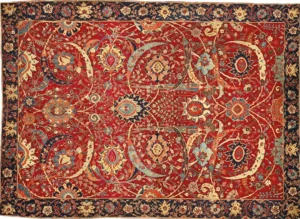
The Clark Sickle-Leaf Carpet is the undisputed star of the international antique rug market. This early 17th-century Persian masterpiece sold at Sotheby’s New York in 2013 for approximately $33.8 million.
The carpet is generally attributed to Kerman in southeast Persia and belongs to the celebrated group of Safavid-era carpets often described as “Vase-technique” carpets.
Its extraordinary composition features large sickle-shaped leaves, flowering vines, palmettes, blossoms, trees, and complex botanical forms arranged across a dramatic red field.
Rather than appearing like a repetitive furnishing pattern, the carpet has the visual complexity and balance of a monumental painting.
Why Is the Clark Sickle-Leaf Carpet So Expensive?
Its value comes from the combination of several extremely rare characteristics. The sickle-leaf composition itself is unusual among surviving Vase carpets, while the carpet’s artistic quality, age, condition, and provenance place it in a museum-level category.
The carpet was associated with American industrialist and collector William A. Clark and later became part of the Corcoran Gallery of Art collection.
When the carpet returned to the market, collectors were not simply competing for an old Persian rug. They were bidding for an exceptionally rare surviving example of Safavid textile art with an important documented history.
That combination pushed the final price far above previous carpet records and made it the most expensive carpet ever sold in history.
Kerman “Vase” Carpet | Sold for $9.6 Million
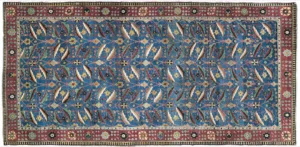
Next on the list is another extraordinary Persian masterpiece: the Comtesse de Béhague Kerman Vase Carpet. The 17th-century carpet sold at Christie’s London in 2010 for £6,201,250, approximately $9.6 million at the time.
Before the Clark Sickle-Leaf Carpet appeared at auction three years later, this sale represented one of the most important world records in the carpet market.
What Makes a Kerman Vase Carpet Special?
Kerman Vase carpets represent one of the most sophisticated traditions of Safavid Persian weaving. Their designs often combine elaborate floral networks, palmettes, branching vines, blossoms, and complex botanical compositions.
The Comtesse de Béhague example is particularly important because it combines extraordinary age, rarity, sophisticated craftsmanship, strong condition, and prestigious provenance.
At this level, a Persian carpet is no longer viewed simply as an interior furnishing. It is treated as an important surviving work of classical Persian art.
Imperial Ming Double-Dragon Throne Carpet | Sold for €6.88 Million
Not all record-breaking carpets are Persian. One of the most important exceptions is the monumental Imperial Ming Double-Dragon Throne Carpet.
Dating to the 16th century, the carpet sold at Christie’s Paris in 2021 for €6.88 million.
The enormous carpet features imperial dragon imagery associated with the Ming court and measures more than five meters in one direction.
Why Is the Ming Dragon Carpet So Valuable?
Only a very limited number of complete imperial carpets from this period survive. Large historical carpets are especially vulnerable to cutting, wear, fading, repair, and structural damage over several centuries.
The rarity, enormous scale, imperial symbolism, historic importance, and remarkable survival of this example pushed it into the highest level of the international carpet market.
Its sale also demonstrates that although Persian rugs dominate many auction records, exceptional royal carpets from other weaving traditions can also command extraordinary prices.
Mughal “Star Lattice” Carpet | Multimillion-Dollar Auction Record
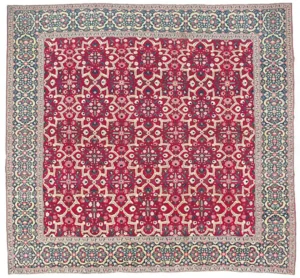
The famous Vanderbilt Mughal Millefleurs “Star-Lattice” Carpet is another masterpiece to reach the highest levels of the auction market.
Woven in North India during the late 17th or early 18th century, the carpet sold at Christie’s London in 2013 for £4,786,500, approximately $7.6 million at the time.
Though technically Indian, Mughal court carpets were deeply influenced by Persian artistic traditions. This cultural exchange helped produce highly sophisticated floral compositions that combined Persian-inspired design with Mughal court aesthetics.
The Star-Lattice Carpet is particularly notable for its delicate floral motifs, geometric lattice structure, impressive size, and luxurious pashmina pile.
The Vanderbilt Provenance
Its history adds another important layer to its value. The carpet belonged to Cornelius Vanderbilt II and was associated with the Vanderbilt family for generations.
In the high-end antique rug market, documented provenance can dramatically increase the importance of an already exceptional piece.
The combination of rare materials, sophisticated Mughal design, remarkable preservation, scale, and prestigious provenance helped produce its extraordinary auction result.
Royal Mughal Pashmina Carpet | Sold for £5.44 Million
Another major Mughal carpet entered the record books in 2022. A Royal Mughal pashmina carpet woven in northern India around the mid-17th century sold at Christie’s London for £5.44 million.
The carpet is associated with the highly sophisticated artistic culture of the Mughal court during the period of Emperor Shah Jahan.
Why Is Pashmina Important?
Pashmina fibers are exceptionally fine. Their delicacy allowed elite Mughal weavers to create floral motifs with an extraordinary degree of detail and precision.
The carpet combines fine pashmina with a sophisticated foundation and naturalistic floral imagery typical of elite Mughal court art.
Surviving 17th-century Mughal pashmina carpets are exceptionally rare. Fine pashmina and silk foundations are vulnerable to deterioration, which makes complete or substantial surviving examples particularly important.
Its rarity, royal association, materials, craftsmanship, condition, and artistic quality explain why collectors pushed the price above £5 million.
The Pearl Carpet of Baroda | Sold for $5.5 Million
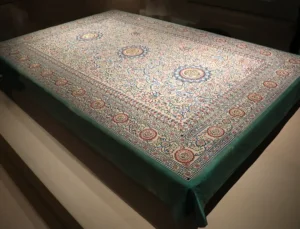
Although newer auction records place it just outside the current Top 5, the Pearl Carpet of Baroda remains one of the most famous and valuable carpets ever offered at auction.
It sold in 2009 for approximately $5.5 million.
This extraordinary 19th-century masterpiece was commissioned by the Maharaja of Baroda in India. Unlike traditional wool or silk carpets, the Pearl Carpet is covered with an astonishing quantity of natural Basra pearls and decorated with diamonds, emeralds, rubies, and other precious stones.
It therefore sits somewhere between textile art, royal ceremonial craftsmanship, and monumental jewelry.
Why Is the Pearl Carpet of Baroda So Valuable?
Its value comes from an almost unique combination of precious materials, royal patronage, rarity, craftsmanship, and cultural history.
There is simply very little in the textile market that can be directly compared with it.
For this reason, the Pearl Carpet of Baroda remains one of the most recognizable multimillion-dollar carpets in auction history.
Rothschild Tabriz Medallion Carpet | Sold for $2.4 Million
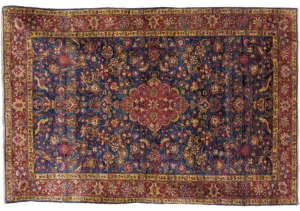
The Rothschild Tabriz Medallion Carpet achieved approximately $2.4 million when it sold in 1999, a groundbreaking result at the time for a Persian carpet.
Woven in Tabriz, one of Persia’s most important historical weaving centers, the carpet features a monumental central medallion, refined arabesque decoration, and sophisticated classical Persian design.
Its association with the famous Rothschild collection also gave the carpet an exceptionally prestigious provenance.
Although later carpets surpassed its price, the Rothschild Tabriz played an important role in changing how the international art market viewed Persian carpets.
It helped reinforce the idea that the finest historical Persian rugs should be considered serious collectible works of art rather than simply luxurious furnishings.
What Makes a Rug Worth Millions?
Looking at these extraordinary auction results, several patterns emerge. The most expensive carpets usually combine multiple factors rather than relying on one characteristic alone.
1. Extreme Rarity
When only a few comparable examples survive, collectors may have very few opportunities to acquire another one. Rarity is therefore one of the most powerful drivers of value.
2. Age and Historical Importance
Many record-breaking rugs date from the 16th or 17th centuries, particularly the Safavid Persian and Mughal periods.
However, age alone is not enough. A carpet becomes significantly more important when it also represents an exceptional artistic period, royal workshop, or historic weaving tradition.
3. Exceptional Craftsmanship
The world’s greatest carpets may feature complex weaving structures, extremely fine materials, sophisticated drawing, difficult color systems, and highly controlled design execution.
However, a high knot count by itself does not automatically make a carpet valuable.
4. Provenance
Provenance means the documented history of ownership.
A rug that once belonged to a royal family, major collector, historic estate, or important museum collection may become considerably more desirable to serious collectors.
5. Condition
Textiles are fragile. A carpet that survives for 300 or 400 years while retaining significant original pile, structure, color, and design is exceptionally rare.
6. Artistic Quality
The most valuable rugs are ultimately judged as works of art. Composition, color balance, drawing, originality, visual impact, and technical refinement all matter.
7. Rare Materials
Silk, fine pashmina, precious-metal thread, or — in the extraordinary case of the Pearl Carpet of Baroda — pearls and gemstones can dramatically increase rarity and complexity.
8. Auction Competition
Major historical carpets may remain inside private collections for decades. When one finally appears at auction, several wealthy collectors may compete for the same object.
That competition can push the final sale price far beyond the original estimate.
These rugs are not expensive simply because they are old. They are expensive because they represent some of the highest achievements in textile and decorative art history.
Why Are Persian Rugs Among the Most Expensive Rugs in the World?
Persian carpet weaving occupies a unique place in the history of textile art.
During periods of royal patronage — particularly under the Safavid dynasty — Persian workshops produced carpets of extraordinary artistic and technical sophistication.
Historic weaving centers such as Tabriz, Kerman, Kashan, and Isfahan became famous for refined design, sophisticated weaving, high-quality materials, and complex color systems.
Persian artistic traditions also influenced carpet production in neighboring regions, including the Mughal court workshops of India.
This helps explain why Persian carpets appear repeatedly among the most expensive rugs in the world.
To learn more about the major regional traditions, explore our complete guide to Persian rug styles.
What Is the Most Expensive Persian Rug Ever Sold?
The Clark Sickle-Leaf Carpet holds the most important public auction record for a Persian carpet.
Its approximately $33.8 million sale price places it far above other major Persian carpet auction results.
The extraordinary price reflects the convergence of rarity, Safavid-era artistry, condition, provenance, historical importance, and intense collector competition.
Are All Old Persian Rugs Valuable?
No. Age alone does not make a Persian rug valuable.
Two rugs woven during a similar period can have dramatically different values depending on factors such as:
- Origin
- Age
- Rarity
- Materials
- Condition
- Design quality
- Craftsmanship
- Restoration history
- Provenance
- Size
- Historical importance
- Current collector demand
A damaged antique rug with a common design cannot be compared with a rare museum-level Safavid carpet simply because both are old.
If you are researching an older rug, read our guide on how to tell the age of a Persian rug and our guide on how to value an old Persian rug.
Most Expensive Rug vs. Most Valuable Rug: What Is the Difference?
The terms are related, but they do not always mean the same thing.
Most expensive normally refers to a documented transaction, such as a public auction result.
Most valuable may instead refer to an expert valuation of an object that has never been sold publicly.
Some museum carpets may be culturally priceless, but without a public sale there is no reliable auction price that allows them to be ranked directly against other rugs.
For that reason, this article focuses primarily on documented public auction results.
Frequently Asked Questions About the Most Expensive Rugs
What is the most expensive rug in the world?
The Clark Sickle-Leaf Carpet is the most expensive rug ever sold at public auction. It achieved approximately $33.8 million at Sotheby’s New York in 2013.
What is the most expensive Persian rug ever sold?
The Clark Sickle-Leaf Carpet is also the most expensive Persian rug ever sold at public auction. It dates to the early 17th century and is generally associated with Kerman in Persia.
How much did the Pearl Carpet of Baroda sell for?
The Pearl Carpet of Baroda sold for approximately $5.5 million in 2009.
Is the Pearl Carpet of Baroda a Persian rug?
No. The Pearl Carpet of Baroda is an Indian royal object associated with Baroda. It is included because it remains one of the most famous and expensive carpets ever sold at auction.
Why are Persian rugs so expensive?
Exceptional Persian rugs can command very high prices because of their rarity, craftsmanship, artistic quality, materials, historical significance, condition, provenance, and collector demand.
Does a high knot count make a rug more expensive?
Not necessarily. Knot density can indicate technical refinement, but rarity, age, origin, design, condition, materials, provenance, and artistic importance may have a much greater effect on value.
Are old Persian rugs always valuable?
No. An antique rug can be old without being exceptionally rare or valuable. Condition, origin, craftsmanship, design, restoration, materials, and market demand all affect its value.
Are Persian rugs the most expensive rugs in the world?
Persian carpets hold several of the greatest auction records, including the Clark Sickle-Leaf Carpet and the Kerman Vase Carpet. However, exceptional Mughal Indian and Imperial Chinese carpets have also achieved multimillion-dollar prices.
Explore Hand-Knotted Persian Rugs
The record-breaking carpets in this article represent the extreme upper end of the international collector market, but their artistry reflects the same centuries-old weaving traditions that make Persian rugs admired around the world.