

How to Remove Coffee Stains From Rugs
A spilled cup of coffee on a handmade Persian rug can feel like a…
Article Guide
HAND-MADE PERSIAN RUGS COLLECTIONS
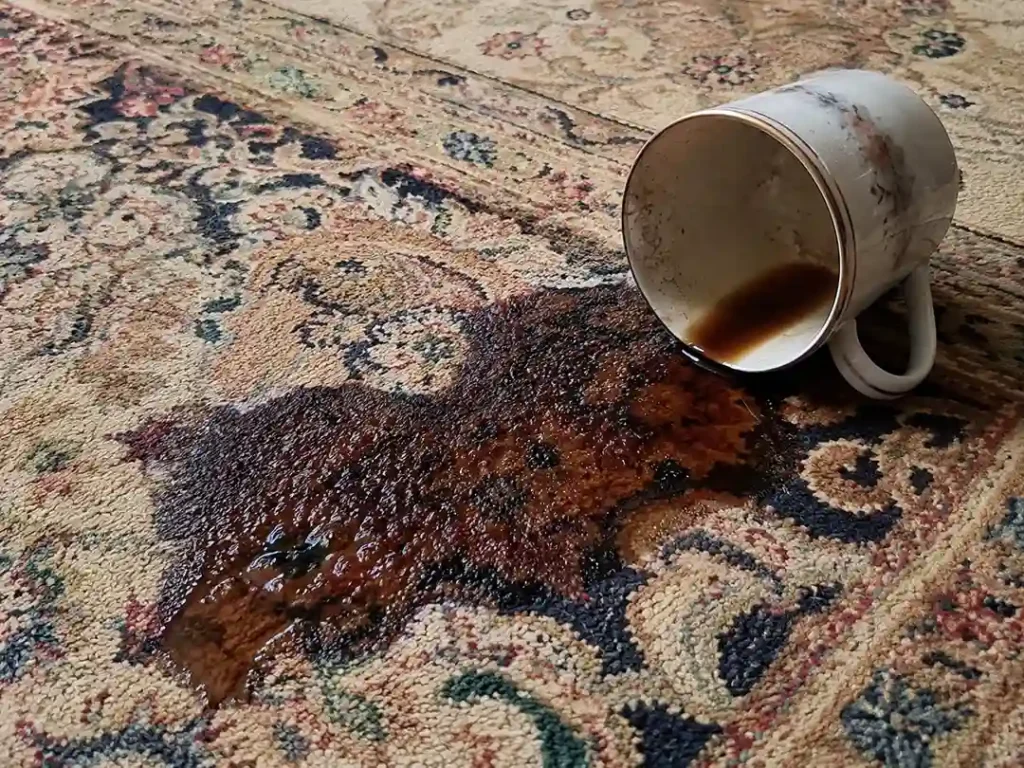
A spilled cup of coffee on a handmade Persian rug can feel like a disaster especially when the rug is woven with natural wool, vegetable dyes, or delicate silk details. Unlike synthetic machine-made carpets, authentic Persian rugs require a much more careful cleaning approach. Using the wrong product or scrubbing too aggressively can permanently damage the fibers, distort the colors, or leave behind visible discoloration.
The good news is that most coffee stains can be removed successfully if treated correctly and quickly.
In this guide, we’ll explain exactly how to clean coffee stains from a Persian rug safely, what mistakes to avoid, and how to protect the rug’s beauty and value over time.
Why Coffee Stains Are Dangerous for Persian Rugs
Coffee stains are one of the most problematic household stains for handmade rugs because it contains:
- Dark natural pigments
- Oils
- Acidity
- Tannins that bond quickly to fibers
If the coffee contains milk or sugar, the situation becomes even more serious. Sugar residue attracts dirt over time, while milk can create odor or bacterial buildup deep inside the wool foundation.
Persian rugs are especially vulnerable because many are dyed using natural vegetable dyes rather than synthetic industrial coloring. Harsh chemicals may cause color bleeding or fading, particularly in older or high-quality handwoven carpets.
That’s why proper technique matters more than speed alone.
Step 1: Act Immediately
The faster you respond, the higher the chance of completely remove coffee stains.
As soon as coffee spills:
- Do NOT rub the stain
- Do NOT scrub aggressively
- Do NOT pour random cleaning chemicals onto the rug
Instead, use a clean white cotton cloth or paper towel to gently blot the liquid.
Press downward softly to absorb as much coffee as possible. Continue using dry sections of the towel until very little moisture transfers.
Rubbing is one of the biggest mistakes people make. It pushes the coffee deeper into the fibers and spreads the stain outward.
Step 2: Use Cold Water not Hot Water
Many people instinctively use warm or hot water for stains, but with Persian rugs this can be risky.
Hot water may:
- Set the stain permanently
- Cause vegetable dyes to bleed
- Damage wool fibers
- Distort silk highlights
Instead, lightly dampen a clean cloth with cold water and continue blotting the affected area from the outside inward. This helps prevent the stain from spreading further across the rug.
The goal is controlled moisture not soaking the rug.
Too much water can penetrate the rug foundation and create mildew or odor problems underneath.
Step 3: Prepare a Gentle Cleaning Solution
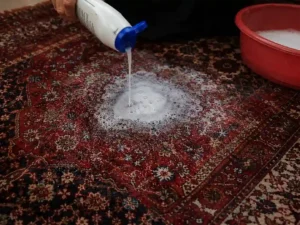
For most Persian rugs, a mild solution works best.
Mix:
- A small amount of clear dish soap
- With cold water
Avoid:
- Bleach
- Vinegar on delicate silk rugs
- Carpet shampoos with strong chemicals
- Ammonia-based cleaners
Dip a clean cloth into the solution and gently dab the stain. Work slowly and patiently.
You should never scrub a handmade Persian rug aggressively, especially if it contains soft wool or silk fibers.
Step 4: Blot Again to Remove Residue
After applying the cleaning solution:
- Use another clean damp cloth with only cold water
- Blot the area again to remove soap residue
This step is extremely important because leftover soap can attract dirt later, making the cleaned area become dirty faster than the rest of the rug.
Continue blotting until the rug feels clean and only slightly damp.
Step 5: Dry the Rug Properly
Proper drying is just as important as cleaning.
After removing the stain:
- Place a dry towel over the area
- Press gently to absorb moisture
- Allow airflow in the room
Never use:
- Direct heat
- Hair dryers on high heat
- Intense sunlight immediately after cleaning
Excessive heat can shrink wool fibers or affect natural dyes.
If possible, slightly elevate the rug area to improve air circulation underneath.
What NOT to Do
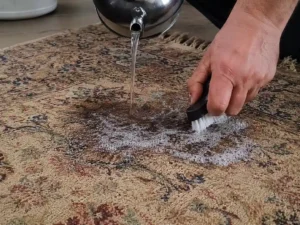
Many Persian rugs become permanently damaged not because of the spill itself — but because of incorrect cleaning methods afterward.
Avoid these common mistakes:
Scrubbing the stain
This damages fibers and spreads pigment deeper.
Using bleach or harsh stain removers
These chemicals can permanently destroy vegetable dyes.
Over-wetting the rug
Too much moisture can weaken the foundation and create odor.
Steam cleaning delicate handmade rugs
High heat and pressure may damage the weave structure.
Ignoring the stain for days
Coffee tannins become harder to remove over time.
Special Warning for Silk Persian Rugs
Silk rugs require even greater caution.
Silk absorbs liquid quickly and is much more sensitive than wool. Even mild household cleaners may leave water marks or discoloration.
If coffee spills on a fine silk Persian rug:
- Blot immediately
- Avoid DIY chemical treatments
- Consider contacting a professional rug cleaner specializing in handmade carpets
High-end silk rugs can lose significant value if cleaned improperly.
When Professional Cleaning Is Necessary
You should consider professional cleaning if:
- The stain has dried completely
- The coffee included milk or cream
- The rug is antique
- Colors begin bleeding
- Odor develops
- The stain reaches deep into the foundation
Professional Persian rug cleaners use controlled washing techniques specifically designed for natural fibers and traditional dyes.
For valuable handmade rugs, professional care is often safer than experimenting with household products.
How to Protect Your Persian Rug From Future Stains
Prevention is always easier than restoration.
To reduce future risk:
- Avoid placing drinks directly over valuable rugs
- Use stable coffee tables
- Rotate rugs regularly
- Vacuum gently to prevent dirt buildup
- Professionally wash the rug every few years
A properly maintained Persian rug can last for generations while maintaining both its beauty and value.