

THE PERFECT LIVING ROOM RUG
Among the world’s most elegant Persian carpets, handmade Nain rugs hold a special place…
Article Guide
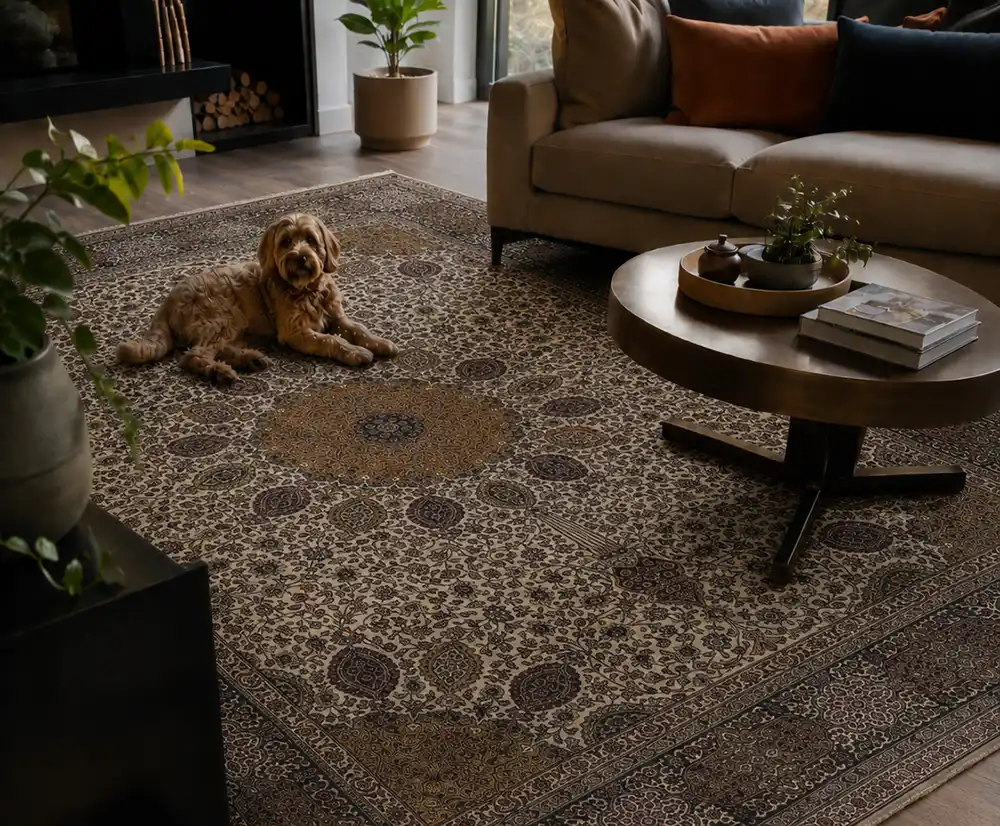
A living room rug does much more than cover an empty floor. It anchors your seating area, adds warmth underfoot, softens sound, introduces color and texture, and helps the entire room feel finished. In many homes, the rug is the design element that quietly brings the sofa, coffee table, armchairs, curtains, artwork, and flooring together. Without it, even a beautifully furnished living room can feel incomplete.
Choosing the right living room rug, however, can feel confusing. Should it be large enough to sit under the sofa? Should it be neutral or patterned? Is wool better than synthetic fiber? Can a traditional handmade Persian rug work in a modern apartment? The answer depends on your room size, furniture layout, lifestyle, color palette, and the mood you want to create. This guide explains how to choose a living room rug that looks beautiful, feels comfortable, and supports the way you actually use your home.
Why a Living Room Rug Matters More Than You Think
The living room is often the most visible and frequently used space in a home. It is where people relax, host guests, watch movies, read, drink coffee, and spend time with family. A living room rug helps define this central area and makes it feel intentional. Instead of seeing separate pieces of furniture floating in a room, the eye reads the space as one comfortable composition.
A rug also changes the atmosphere of the room immediately. A soft wool rug can make a formal space feel warmer. A bold patterned rug can add personality to a simple neutral room. A vintage rug can bring history and character to a contemporary interior. Even a small rug, when placed thoughtfully, can guide movement and create a sense of balance.
From a practical point of view, a living room rug also protects flooring, reduces noise, adds traction, and makes the space more comfortable for children, pets, and guests. In open-plan homes, rugs are especially useful because they visually separate the living area from the dining or kitchen space without adding walls.
How to Choose the Right Living Room Rug Size
Size is one of the most important decisions when buying a living room rug. A rug that is too small can make the room feel disconnected, while a rug that is too large may overwhelm the space. The goal is to choose a size that relates to your furniture layout and creates a clear seating zone.
The Front-Legs-On Rule
For many living rooms, the easiest rule is to place at least the front legs of the sofa and armchairs on the rug. This creates a unified furniture arrangement while keeping the layout flexible. It is especially effective in medium-sized rooms where a full room-size rug may not be necessary.
The All-Furniture-On Layout
In larger living rooms, choose a living room rug big enough for all major seating pieces to sit fully on it. This creates a luxurious, hotel-like look and makes the seating area feel generous. Leave some visible floor around the rug so the room still has breathing space.
The Small Accent Rug Approach
In compact apartments or smaller sitting areas, a smaller rug can still work if it is used intentionally. Place it beneath the coffee table and allow it to act as a decorative focal point. This approach works especially well with highly detailed handmade rugs, where the rug itself is treated as a piece of art.
Best Living Room Rug Materials for Comfort and Durability
Material affects how a rug feels, how long it lasts, and how easy it is to maintain. A living room rug usually receives regular foot traffic, so durability matters. At the same time, the rug should feel pleasant underfoot and suit the mood of the room.
Wool is one of the best materials for a living room rug because it is naturally resilient, soft, insulating, and long-lasting. High-quality wool rugs often age beautifully, developing character over time rather than looking worn out. This is one reason handmade Persian rugs and Turkmen rugs remain highly desirable for living rooms around the world.
Cotton rugs can feel casual and lightweight, making them useful for relaxed spaces. Jute and sisal rugs add natural texture, although they are usually less soft. Synthetic rugs can be budget-friendly and practical, but they rarely offer the same depth, warmth, and heirloom quality as a well-made wool rug. For a living room designed to feel timeless, a handmade wool rug is often the strongest choice.
Choosing the Best Color for a Living Room Rug
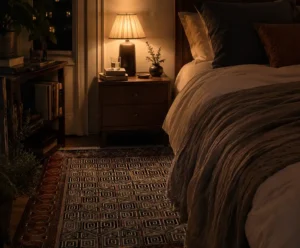
Color determines whether your rug blends quietly into the room or becomes the main design feature. A neutral living room rug in beige, ivory, taupe, gray, or soft brown can create a calm foundation. This works well if your sofa, artwork, or curtains already carry strong colors.
A colorful rug, on the other hand, can transform a plain room. Deep red, navy blue, emerald green, rust, terracotta, and gold can make a living room feel richer and more memorable. Traditional Persian and Turkmen rugs often combine several colors in a balanced way, which makes them surprisingly versatile. They can connect different tones in the room and make the decor feel layered rather than flat.
If you are unsure, look at the existing colors in your living room. Choose a rug that repeats at least one color already present in the space. For example, a rug with hints of blue can connect with blue cushions or artwork. A rug with warm red or rust details can complement wood furniture, leather chairs, or brass accents.
Patterned vs. Plain Living Room Rug: Which One Is Better?
There is no single right answer. A plain rug can create a clean, minimal look and allow other elements to stand out. It is a safe option for rooms that already have patterned wallpaper, busy upholstery, or many decorative objects. However, a plain rug may not add enough character if the rest of the room is very simple.
A patterned living room rug brings movement, personality, and visual interest. It can hide small marks better than a plain rug and make the room feel more curated. Handmade rugs are especially effective because their patterns are not merely printed decorations; they are woven details shaped by craftsmanship, cultural memory, and design tradition.
For modern interiors, a patterned Persian rug can create a beautiful contrast against clean-lined furniture. For classic interiors, it can reinforce a sense of elegance. For eclectic homes, it can become the central piece that ties everything together.
How to Place a Living Room Rug with Your Sofa and Coffee Table
Placement can make or break the final look. Start by centering the rug with the main seating area, not necessarily with the entire room. In many homes, the sofa is the anchor, so the rug should align with the sofa and coffee table. Avoid placing the rug too far away from the furniture, because this makes the room feel scattered.
The coffee table should usually sit fully on the rug. If the rug is large enough, the sofa and chairs should touch or overlap the rug as well. Keep the rug straight unless your room intentionally uses an angled layout. Symmetry is not always required, but visual balance is important.
If you have an open-plan living room, use the rug to define the conversation area. The edge of the rug can act like an invisible border, showing where the living space begins and ends. This is one of the easiest ways to make a large open room feel cozy and organized.
Living Room Rug Ideas for Different Interior Styles
Modern Living Rooms
For a modern living room, choose a rug that adds warmth without making the space feel crowded. A vintage Persian rug, a geometric wool rug, or a muted handmade rug can soften straight lines and minimalist furniture. The contrast between old-world craftsmanship and modern design often looks sophisticated and intentional.
Classic Living Rooms
Classic interiors work beautifully with detailed handmade rugs. A traditional living room rug with a central medallion, floral borders, or tribal motifs can complement wood furniture, elegant curtains, and antique decor. Choose rich colors if you want a formal atmosphere, or muted tones for a softer look.
Bohemian and Eclectic Living Rooms
Bohemian interiors allow more freedom. Layered textures, plants, books, art, and patterned textiles all work well with a characterful rug. A Turkmen rug or vintage Persian rug can become the soul of the room, especially when paired with natural materials and relaxed furniture.
Neutral and Minimal Living Rooms
A neutral room does not have to feel empty. A living room rug with subtle pattern, handwoven texture, or faded colors can add depth while preserving calmness. Instead of choosing a completely flat rug, look for natural variations in wool, weave, or tone.
Common Living Room Rug Mistakes to Avoid
The first mistake is choosing a rug that is too small. This is the most common reason a living room feels visually off. When in doubt, consider going larger, especially if you want a more polished look.
The second mistake is ignoring lifestyle. A very light rug may look beautiful, but it may not be ideal for a busy family room with pets, children, and heavy daily use. In high-traffic spaces, choose durable materials and patterns that can handle real life.
The third mistake is treating the rug as an afterthought. A living room rug should be chosen as part of the overall design plan. Think about the sofa color, wall color, flooring, natural light, and the feeling you want to create. A good rug should support all of these elements.
Living Room Rug FAQ
What size rug is best for a living room?
The best size depends on the layout, but most living rooms look better when the rug is large enough for at least the front legs of the sofa and chairs to sit on it. This makes the seating area feel connected.
Can I use a Persian rug in a modern living room?
Yes. A Persian rug can look stunning in a modern living room because it adds warmth, history, and contrast. It works especially well with simple sofas, neutral walls, and natural materials.
Is wool a good material for a living room rug?
Yes. Wool is durable, comfortable, naturally resilient, and suitable for everyday living spaces. A high-quality wool living room rug can remain beautiful for many years with proper care.
Should a living room rug be darker or lighter than the sofa?
Either can work. A darker rug can ground the room and hide wear more easily, while a lighter rug can make the space feel open and airy. The best choice depends on your flooring, sofa color, lighting, and lifestyle.