

Best Persian Rug Size for Dining room
Choosing the right Persian rug for a dining room sounds simple at first. You…
Article Guide
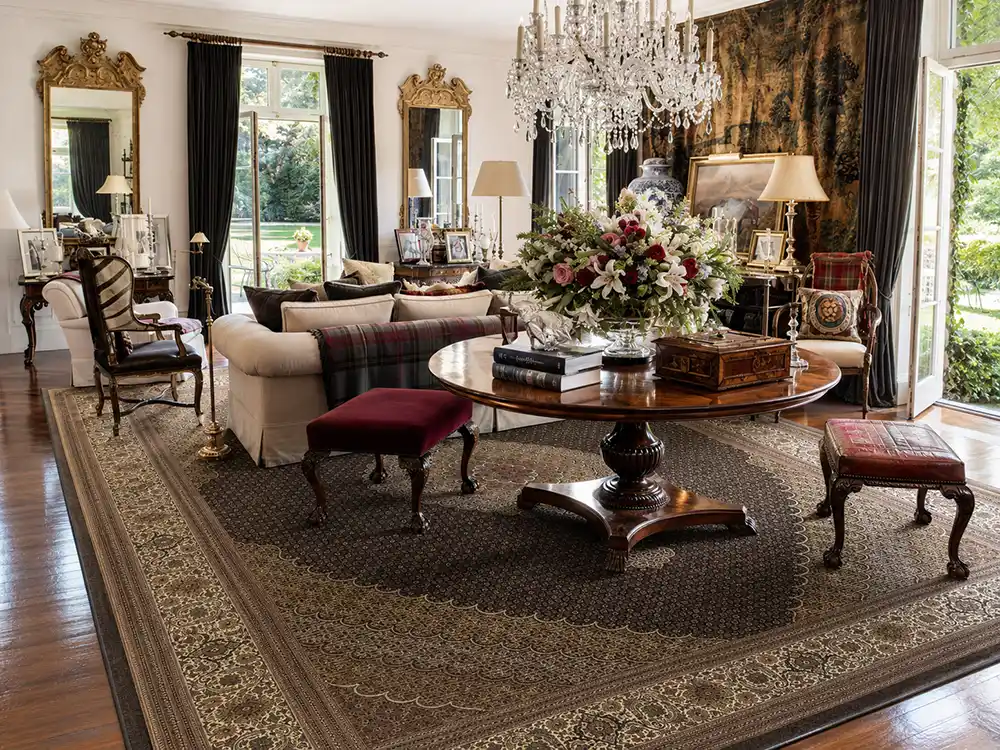
Choosing the right Persian rug size for dining room sounds simple at first. You find a beautiful handmade rug, place it under the table, and the room should instantly look better. But in real life, size matters much more than most people expect. A rug that is too small can make the dining area feel awkward, while a rug that is too large may overwhelm the room or hide too much of your flooring.
If you are wondering what size Persian rug for dining room table is best, the answer depends on a few practical things: the size of your table, the number of chairs, the shape of the room, and how much space you want around the dining set. A Persian rug under dining table should not only look beautiful, but also make daily use comfortable.
In this guide, we will walk through the most important sizing rules, common mistakes, and practical tips for choosing the best Persian rug for dining room spaces.
Why a Persian Rug Works So Well in a Dining Room
A dining room is more than just a place to eat. It is often where families gather, guests sit for long conversations, and special occasions happen. A Persian rug can make that space feel warmer, more elegant, and more complete.
Unlike many modern machine-made rugs, handmade Persian rugs have depth, character, and history. Their patterns are detailed, their colors are rich, and they can bring a sense of soul into a room. This is especially important in dining rooms, where furniture can sometimes feel heavy or formal.
A good Persian rug can soften the look of a wooden table, add contrast to neutral walls, and create a clear visual zone for the dining area. In open-plan homes, this is especially useful because the rug helps define where the dining space begins and ends.
But the beauty of the rug will only work if the size is right.
The Golden Rule for Dining Room Rug Size
The most important rule is this: your rug should be large enough for the dining chairs to stay on the rug, even when they are pulled out.
As a general guide, add at least 24 to 30 inches of extra rug space on every side of the dining table. This gives enough room for people to move their chairs back without the chair legs falling off the edge of the rug.
For example, if your dining table is 40 inches wide and 72 inches long, you should look for a rug that is at least around 88 inches wide and 120 inches long. In rug sizing, that usually means an 8×10 Persian rug or, even better, a 9×12 Persian rug depending on your room.
This extra space makes a big difference. Without it, the chairs may catch on the rug every time someone sits down or gets up. That can feel uncomfortable and may also cause more wear on the rug edges over time.
Best Persian Rug Size for a 4-Seater Dining Table
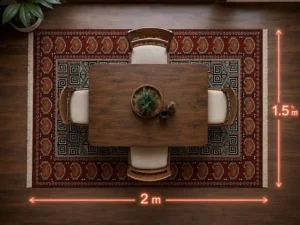
For a small 4-seater dining table, an 8×10 Persian rug is usually a safe and comfortable choice. If the table is round or square and the room is compact, you may sometimes be able to use a 6×9 rug, but only if the chairs still have enough space.
A common mistake is placing a small rug directly under the table with the chairs half on and half off the rug. This rarely looks good. It makes the dining set feel disconnected and can make the room look smaller than it really is.
For most 4-seater dining rooms, choose:
- 8×10 Persian rug for the most balanced look
- 6×9 Persian rug only for very small tables or breakfast areas
- Round Persian rug if you have a round table and want a softer layout
If you are using a Persian rug in a small dining room, avoid extremely busy borders that make the rug feel smaller. A design with a balanced center medallion or all-over pattern often works beautifully.
Best Persian Rug Size for a 6-Seater Dining Table
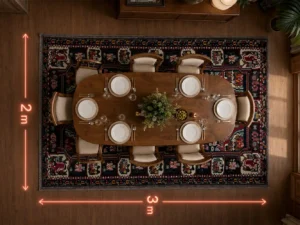
A 6-seater dining table usually needs at least an 8×10 Persian rug. This is one of the most popular sizes because it works well in many average dining rooms.
If your table is longer or your chairs are large, a 9×12 Persian rug may be a better option. This gives the dining area more breathing room and creates a more luxurious look.
For a 6-seater table, consider:
- 8×10 Persian rug for standard dining rooms
- 9×12 Persian rug for larger rooms or wider chairs
- Avoid 5×8 rugs because they are almost always too small for dining use
A Persian rug under dining table should feel intentional. When the rug extends properly beyond the chairs, the entire dining set feels grounded and elegant. When it is too small, even an expensive rug can look like the wrong choice.
Best Persian Rug Size for an 8-Seater Dining Table
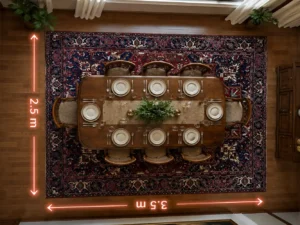
For an 8-seater table, a 9×12 Persian rug is usually the best starting point. This size gives enough space for a longer table and allows chairs to move comfortably.
If your dining table seats eight people and has wide chairs, a 10×13 or 10×14 rug may be even better. This is especially true in formal dining rooms where you want a more generous and impressive look.
A large Persian rug for dining room spaces can make the room feel more polished. It also helps balance the weight of a long table. If the rug is too small, the table can look oversized and the room may feel visually off.
For 8-seater dining tables, choose:
- 9×12 Persian rug for most layouts
- 10×13 Persian rug for larger rooms
- 10×14 Persian rug for formal or spacious dining areas
If your dining room has a chandelier, try to center the rug with both the table and the light fixture. This creates a clean and balanced design.
Should the Shape of the Rug Match the Shape of the Table?
The rug does not always have to match the exact shape of the dining table, but the combination should feel natural.
A rectangular Persian rug is the most flexible choice. It works well with rectangular, oval, and even some round tables. Since most dining rooms are rectangular, this shape usually feels balanced.
A round Persian rug can look beautiful under a round dining table, especially in smaller rooms or breakfast nooks. It creates a softer, more intimate feeling. However, round handmade Persian rugs can be harder to find in the right size.
A square rug may work under a square table, but it needs to be large enough. The same chair rule still applies: chairs should stay on the rug when pulled out.
In most cases, if you are unsure, a rectangular Persian rug is the safest and most timeless choice.
Best Persian Rug Types for Dining Rooms
Not every Persian rug is ideal for a dining room. Since dining rooms involve food, chairs, and regular movement, you want a rug that is durable as well as beautiful.
Wool Persian rugs are usually the best choice for dining rooms. Wool is naturally strong, comfortable, and easier to maintain than more delicate materials. It also handles foot traffic better than silk.
Heriz rugs are a great option because they are durable and often have bold geometric patterns that can hide small marks better than very light or plain rugs. Tabriz rugs can add elegance and detail, especially in more formal dining rooms. Kashan rugs are classic and refined, while Bakhtiari rugs bring warmth and structure.
Silk Persian rugs are stunning, but they are usually not the best option under a dining table. They are more delicate and better suited for low-traffic areas, bedrooms, or decorative spaces.
If you want the best Persian rug for dining room use, choose a high-quality wool rug with a pattern and color palette that can handle real life.
What Colors Work Best Under a Dining Table?
Color is a personal choice, but some shades are more practical than others in dining rooms.
Deep reds, navy blues, warm rusts, ivory with detailed patterns, and earthy tones can all work well. Darker or richer colors usually hide small spills and daily use better than very pale rugs.
If your dining room furniture is dark wood, a rug with red, blue, cream, or gold details can create a classic look. If your furniture is lighter or more modern, a softer Persian rug with muted tones may feel more balanced.
One helpful tip is to look at the color of your dining chairs. Since the chairs will sit directly on the rug, the colors should complement each other. They do not need to match exactly, but they should feel like they belong in the same room.
Common Mistakes to Avoid
The biggest mistake is choosing a rug that is too small. This is by far the most common problem in dining rooms. A small rug may look fine when the chairs are pushed in, but it becomes uncomfortable as soon as people sit down.
Another mistake is choosing a rug only because of its pattern, without thinking about daily use. A very delicate rug may not be practical for a busy family dining room. A very light rug may require more care if you host often or have children.
Some people also forget to measure the room itself. Even if the rug is the right size for the table, it should still leave some visible floor around the edges of the room. Ideally, leave at least 12 to 24 inches of floor between the rug and the walls, depending on the size of the room.
Finally, avoid placing the rug off-center. The rug should align with the table and the overall dining area. A beautiful Persian rug can lose its impact if it looks randomly placed.
How to Measure Before Buying
Before buying a Persian rug for your dining room, measure your dining table first. Write down the length and width. Then add 48 to 60 inches to both measurements. This gives you the extra 24 to 30 inches on each side.
Next, measure your room. Make sure the rug will fit comfortably without touching the walls or blocking doorways. Also check if there are cabinets, sideboards, or other furniture pieces nearby.
If you already have your dining chairs, pull them out as if someone is sitting down. Measure how far they extend from the table. This simple step helps you avoid buying a rug that looks good in theory but feels wrong in real life.