

Handmade vs Machine-Made Rugs
: Learn the key differences between handmade and machine-made rugs, including materials, durability, value,…
Article Guide
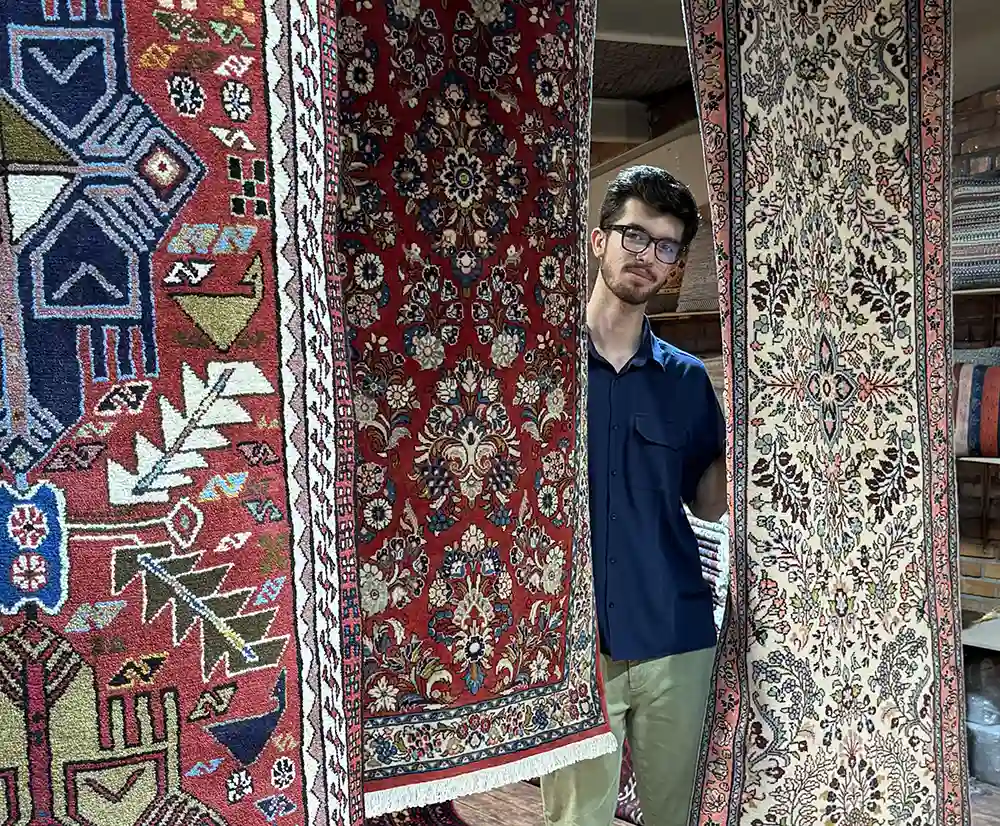
When buying a rug online, one of the most important questions is simple: should you choose a handmade rug or a machine-made rug?
At first glance, both may look beautiful. A machine-made rug can have an attractive pattern, clean colors, and a lower price. A handmade Persian rug, on the other hand, carries craftsmanship, natural materials, artistic detail, and long-term value. For many buyers, the difference is not always obvious from photos alone.
Understanding the difference between handmade and machine-made rugs can help you make a better decision, especially if you are looking for a rug that is authentic, durable, meaningful, and suitable for your home for many years.
In this guide, we explain the main differences between handmade and machine-made rugs, how to identify them, and which one may be right for your space.
What Is a Handmade Rug?
explore authentic handmade rugs
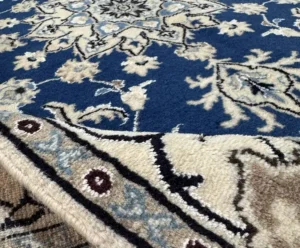
A handmade rug is created by skilled weavers using traditional techniques. Each knot is tied by hand, and the design is built slowly over time. Depending on the size, quality, knot density, and complexity of the pattern, a handmade rug can take months or even years to complete.
Handmade Persian rugs are among the most respected rugs in the world. They are known for their quality, cultural heritage, natural materials, and detailed designs. Each rug reflects the knowledge, patience, and artistic skill of its maker.
Unlike mass-produced rugs, no two handmade rugs are exactly the same. Even when two rugs follow a similar design, small variations in color, pattern, and weaving give each piece its own character. These details are not flaws. They are signs of authenticity.
What Is a Machine-Made Rug?
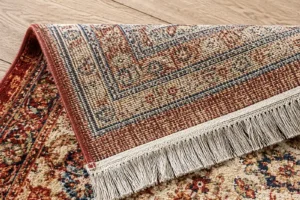
A machine-made rug is produced by automated machines in factories. These rugs are usually made quickly and in large quantities. The designs are programmed digitally, and the rug is woven using mechanical processes rather than hand-knotting.
Machine-made rugs can be affordable and visually appealing. They are often made from synthetic materials such as polypropylene, polyester, acrylic, or nylon. Some may imitate Persian or Oriental designs, but they do not have the same construction, craftsmanship, or long-term value as a handmade Persian rug.
For temporary decoration, rental homes, children’s rooms, or budget-focused interiors, a machine-made rug can be a practical choice. However, if you are looking for authenticity, natural materials, durability, and investment value, handmade rugs offer a very different experience.
1. Craftsmanship and Human Skill
The biggest difference between handmade and machine-made rugs is craftsmanship.
A handmade rug is the result of human skill. Every knot is tied by hand. Every color transition, border, flower, medallion, and motif is created through patience and precision. The weaver must understand the design, the materials, the tension of the wool or silk, and the rhythm of the loom.
This human element gives handmade rugs a sense of depth and life. The design may have slight irregularities, but those small differences are part of the beauty. They show that the rug was made by a person, not a machine.
Machine-made rugs, by contrast, are produced by automated equipment. The design is usually very uniform and repeated with mechanical accuracy. While this can create a clean look, it does not carry the same artistic identity or craftsmanship as a handmade rug.
2. Materials: Natural vs Synthetic
Handmade Persian rugs are usually made from natural materials such as wool, silk, cotton, or a combination of these. Wool is highly valued because it is durable, soft, resilient, and naturally resistant to everyday use. Silk is often used in finer rugs, either as the main material or as highlights within the design.
Natural materials age beautifully. A high-quality wool rug can become softer and more attractive over time when properly cared for.
Machine-made rugs are commonly made from synthetic fibers. These materials can be cheaper to produce and easier to clean in some situations, but they usually do not age in the same way as natural wool or silk. Synthetic fibers may flatten, lose their texture, or show wear more quickly in high-traffic areas.
If you want a rug that feels natural, lasts longer, and improves the atmosphere of your home, a handmade wool or silk rug is usually the stronger choice.
3. Design and Detail
Handmade rugs often have deeper and more complex designs. Persian rugs, for example, may include floral patterns, medallions, geometric motifs, tribal symbols, garden designs, or traditional city patterns from regions such as Tabriz, Kashan, Isfahan, Nain, Qom, Heriz, Shiraz, or Mashad.
Because the rug is made by hand, the design has character. You may notice small differences between the two sides of a pattern or slight variations in spacing. These are normal in handmade rugs and often make the piece more interesting.
Machine-made rugs are designed to look perfect and identical. The pattern is usually printed or mechanically woven with repeated precision. This can look attractive, but it may lack the depth, texture, and individuality of a handmade piece.
A handmade rug is not just a floor covering. It is a piece of textile art.
4. Back of the Rug
One of the easiest ways to compare handmade and machine-made rugs is to look at the back.
In a handmade rug, the design is usually visible on the back because the knots form the pattern throughout the structure of the rug. The back may show small irregularities, which is a good sign. You can often see the individual knots and the natural construction of the piece.
In many machine-made rugs, the back looks too uniform or has a different backing material. Some have glued or latex backing, and the design may not appear with the same clarity as on the front. The edges and fringes may also be attached separately rather than being part of the rug’s foundation.
For online buyers, asking for photos of the back of the rug is one of the best ways to check authenticity.
5. Fringes and Edges
Fringes can also reveal a lot.
In handmade rugs, the fringes are usually part of the rug’s foundation. They are the continuation of the warp threads that run through the rug. This means they are structurally connected to the rug itself.
In many machine-made rugs, fringes are added later for decorative purposes. They may be sewn or glued onto the ends to imitate the look of a handmade rug.
The side edges of a handmade rug are also usually finished by hand. They may not be perfectly identical from one end to the other, but they are part of the rug’s handmade construction.
6. Durability and Lifespan
A well-made handmade rug can last for generations. Many antique Persian rugs are still used and collected today because of their strong construction and high-quality materials.
Handmade rugs are designed to be repaired, restored, cleaned, and preserved. If a section becomes damaged, a skilled rug expert can often repair it.
Machine-made rugs generally have a shorter lifespan. Once the fibers wear down, the backing separates, or the structure becomes damaged, repair is often not practical or worthwhile. Many machine-made rugs are replaced rather than restored.
This is one of the reasons handmade rugs are often seen as long-term purchases rather than short-term decorations.
7. Value Over Time
Machine-made rugs usually lose value after purchase. They are mass-produced products, and because many identical versions may exist, they rarely become collectible.
Handmade Persian rugs are different. Their value depends on factors such as age, origin, material, condition, design, knot density, rarity, and craftsmanship. Not every handmade rug automatically increases in value, but a quality handmade Persian rug can hold value much better than a machine-made rug.
For buyers who care about long-term value, authenticity matters. A handmade rug is not only something you use in your home. It can also be something you keep, pass down, or collect.
8. Price Difference
Machine-made rugs are usually less expensive because they are produced quickly and in large quantities. This makes them accessible for buyers who want a decorative rug at a lower price.
Handmade rugs cost more because they require time, skill, natural materials, and traditional craftsmanship. The price reflects the labor, quality, origin, and uniqueness of the piece.
When comparing prices, it is important to compare more than size and color. A handmade Persian rug and a machine-made rug may both cover the same floor area, but they are not the same type of product.
One is a manufactured decorative item. The other is a handmade work of art with function, history, and character.
9. Which One Is Better for Your Home?
The answer depends on your needs.
A machine-made rug may be suitable if you want a low-cost rug for temporary use, a rental property, or a space where long-term value is not important.
A handmade rug is the better choice if you want quality, authenticity, natural materials, durability, and a unique piece for your home.
For living rooms, dining rooms, bedrooms, offices, and luxury interiors, a handmade Persian rug can become the central design element of the space. It adds warmth, texture, color, and personality in a way that mass-produced rugs usually cannot.
the perfect rugs for living room
10. How to Buy a Handmade Rug Online Safely
If you are buying a handmade Persian rug online, take time to review the details carefully.
Look for clear photos from different angles. Ask for a photo of the back of the rug. Check close-up images of the knots, fringes, corners, and pile. Read the product description carefully and look for information about size, material, origin, condition, and design.
It is also helpful to request a video before purchasing. A video can show the texture, color movement, thickness, and overall feel of the rug more clearly than photos alone.
A trustworthy seller should be transparent about the rug’s details and willing to answer your questions before purchase.
Final Thoughts
The difference between handmade and machine-made rugs is more than the method of production.
A machine-made rug can decorate a room, but a handmade Persian rug can define it.
Handmade rugs offer craftsmanship, natural materials, uniqueness, durability, and long-term value. They carry cultural history and human skill in every knot. Machine-made rugs may be more affordable and practical for short-term use, but they do not offer the same authenticity or character.
If you are looking for a rug that brings beauty, warmth, and meaning into your home, a handmade Persian rug is a choice that can last for many years.
At Arghavan Rugs, we offer authentic handmade Persian rugs with detailed photos, clear descriptions, and worldwide shipping, helping you choose the right rug with confidence.