WORLDWIDE SHIPPING // WEEKLY OFFERS ON INSTAGRAM



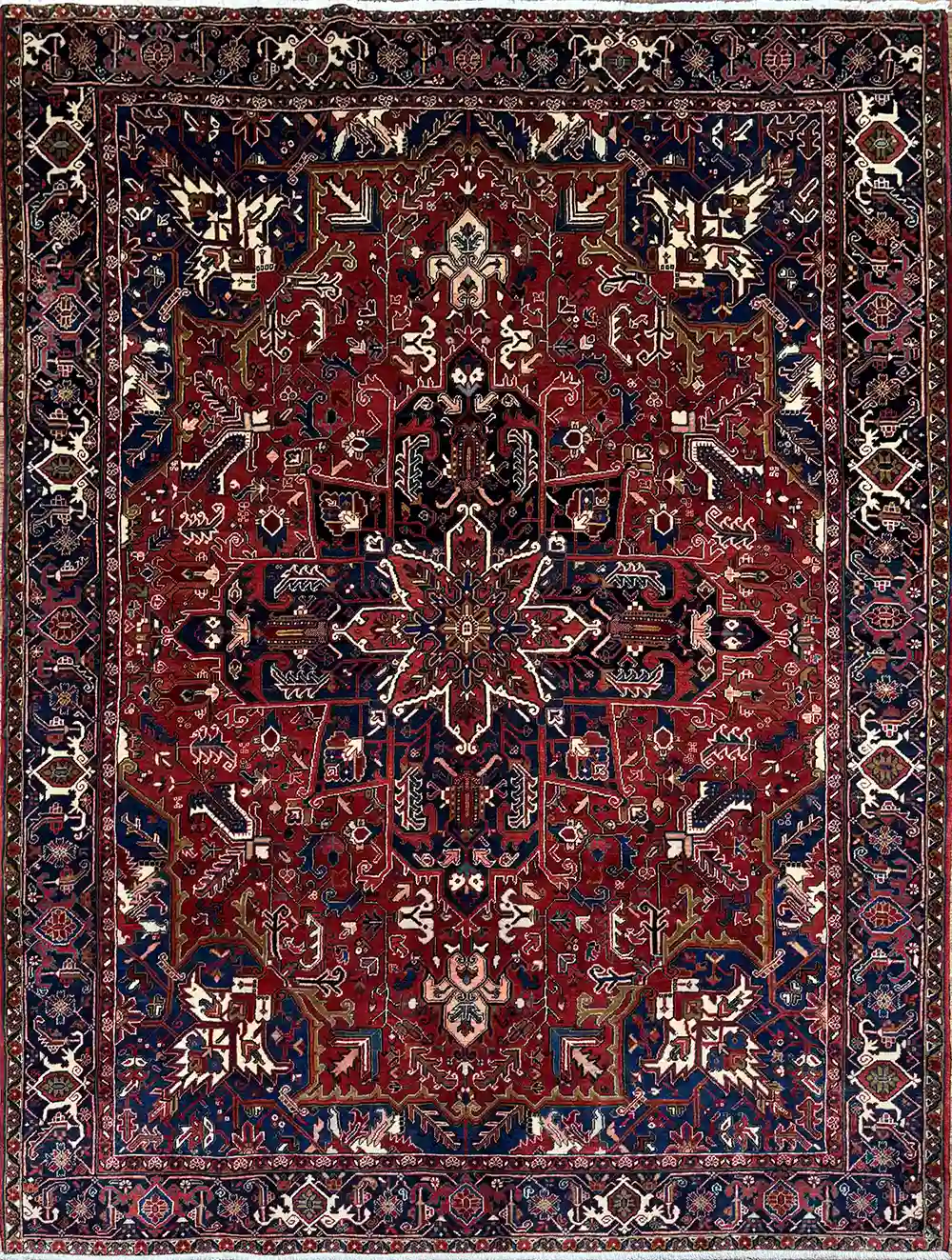
HERIZ RUG 270CM X 350CM (8’85 x 11’5)
$3,098.00
1 in stock
Among the great weaving traditions of Iran, the Heriz rug stands out for its power, structure, and unmistakable character. Woven in the rugged region of northwest Iran near Mount Sabalan, Heriz carpets are known for their bold geometric patterns, rich natural colors, and exceptional durability. Unlike delicate court carpets, a Heriz rug speaks with confidence strong lines, defined forms, and a presence that anchors any interior space
———————————
HANDMADE HERIZ RUG
HERIZ RUG 270CM X 350CM (8’85 x 11’5)
high quality wool
Country of Origin: Handwoven in HERIZ
Pile Content: Wool
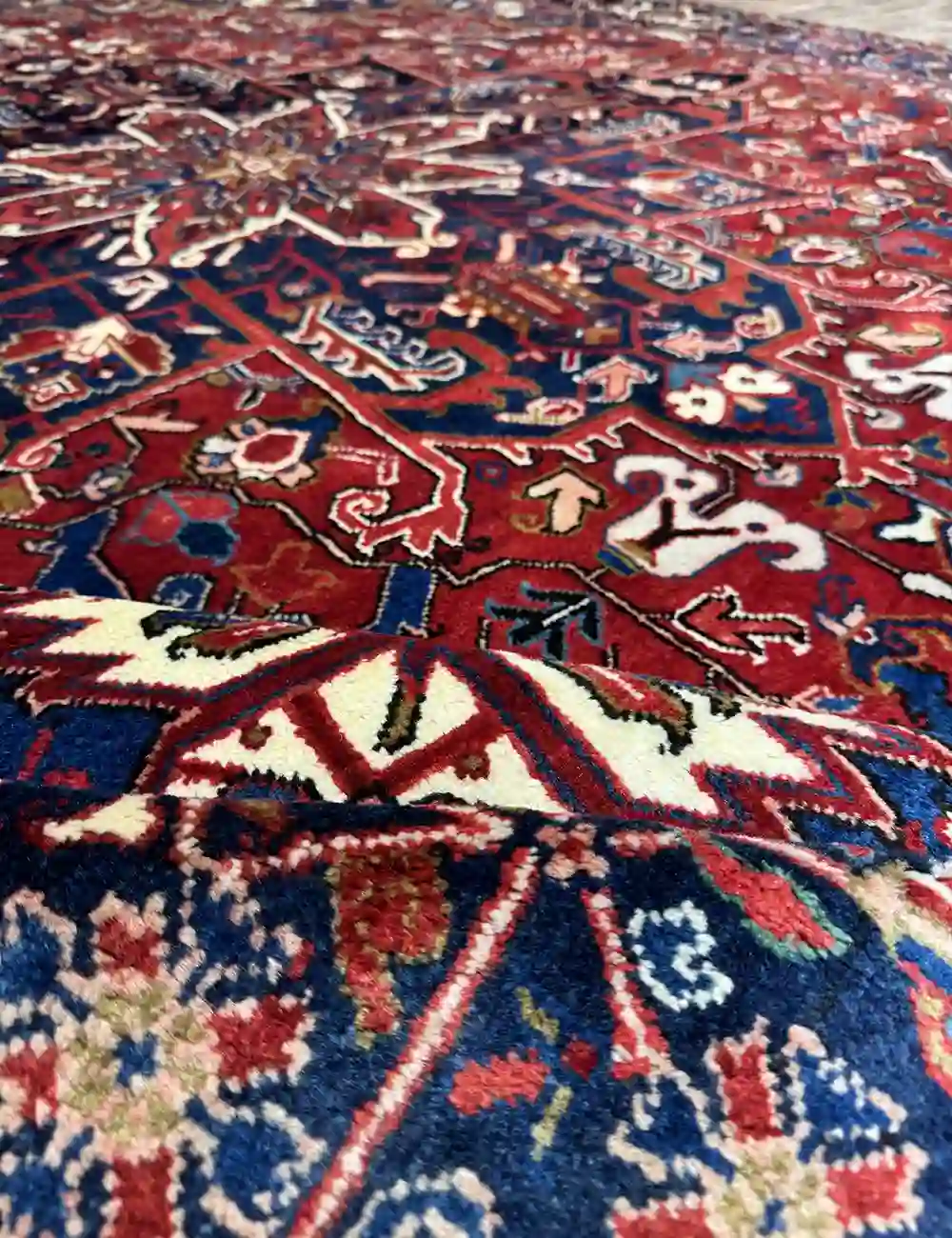
Pile Thickness: 1/2″
———————————
A Tradition Rooted in the Land
Heriz rugs come from villages surrounding the town of Heris in East Azerbaijan province. The weaving tradition here has been passed down for generations, primarily by village artisans who create carpets not only as artistic expressions but also as functional heirlooms for their homes.
One of the defining characteristics of authentic Heriz rugs is the use of vegetable dyes. The reds often come from madder root, blues from indigo, yellows from plants and flowers, and earthy tones from natural minerals and botanicals. Because these dyes are plant-based, they age beautifully. Over time, the colors soften and develop a harmonious patina rather than fading unevenly. This natural aging process adds depth and character, making older Heriz rugs even more desirable.
The Power of Geometric Design
Unlike the intricate floral curves of Isfahan or Kashan rugs, Heriz carpets are famous for their geometric designs. Strong angular medallions, stepped outlines, and bold corner spandrels dominate the composition. The central medallion is often large and sharply defined, surrounded by repeating geometric motifs that create rhythm and balance.
These designs are not accidental. They reflect both regional aesthetics and practical village weaving traditions. The geometric style allows weavers to maintain precision even on large-scale carpets, ensuring clarity and strength in the final composition.
This bold geometry is one of the reasons Heriz rugs have become so popular in modern interiors. The clean lines complement contemporary spaces while still preserving traditional authenticity. Whether placed in a minimalist loft or a classic living room, a Heriz rug provides structure without overwhelming the décor.
Naturally Durable Wool
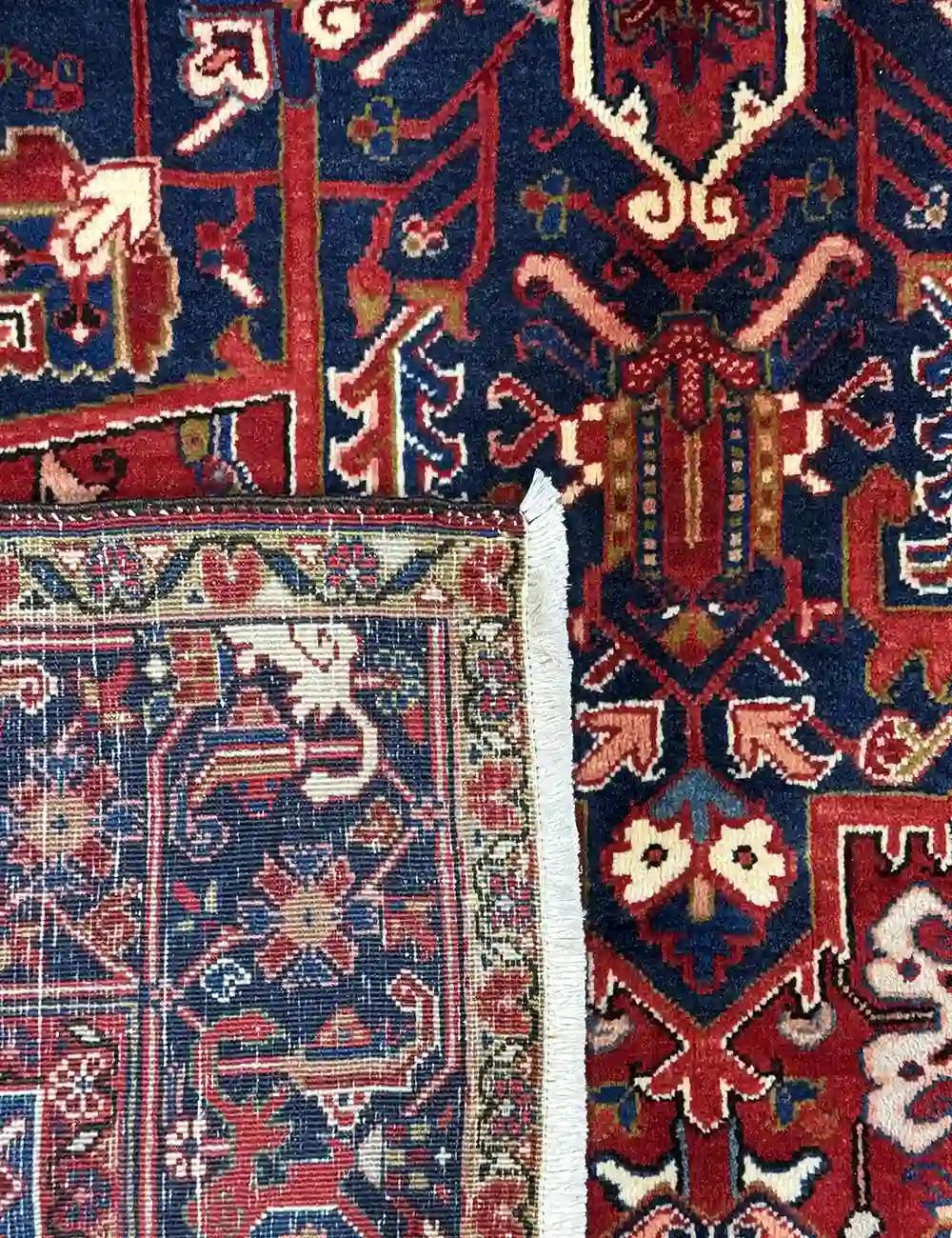
Another reason Heriz rugs are so respected is their durability. The region’s sheep graze in mineral-rich mountain pastures, producing wool that is naturally strong and resilient. Combined with a firm weaving technique and a sturdy cotton foundation, this results in a carpet that can withstand heavy daily use.
In fact, many interior designers specifically recommend Heriz rugs for high-traffic areas such as living rooms and dining rooms. Unlike more delicate silk carpets, Heriz rugs are built for longevity. They are often described as “lifetime rugs” pieces that can be passed down from one generation to the next.
Color Palette: Bold Yet Balanced
Traditional Heriz rugs are known for their vibrant reds, deep blues, ivory accents, and earthy greens. Because the dyes are vegetable-based, the tones feel warm and organic rather than artificial. Even when the colors are bold, they remain balanced.
The red fields are particularly iconic. However, modern and rare variations sometimes feature softer backgrounds such as cream or even muted tones, offering versatility for contemporary interiors. Regardless of the specific palette, the natural dye process ensures harmony among the colors.
A Statement Piece With Cultural Depth
Beyond aesthetics and durability, a Heriz rug carries cultural meaning. These carpets represent village craftsmanship — woven knot by knot by artisans who learned the skill from their families. Each piece reflects not factory production, but human touch and artistic interpretation.
Because of this, no two Heriz rugs are ever identical. Even when following a similar layout, subtle differences in color shading and motif execution make each rug unique. This individuality adds authenticity and emotional value to the piece.