


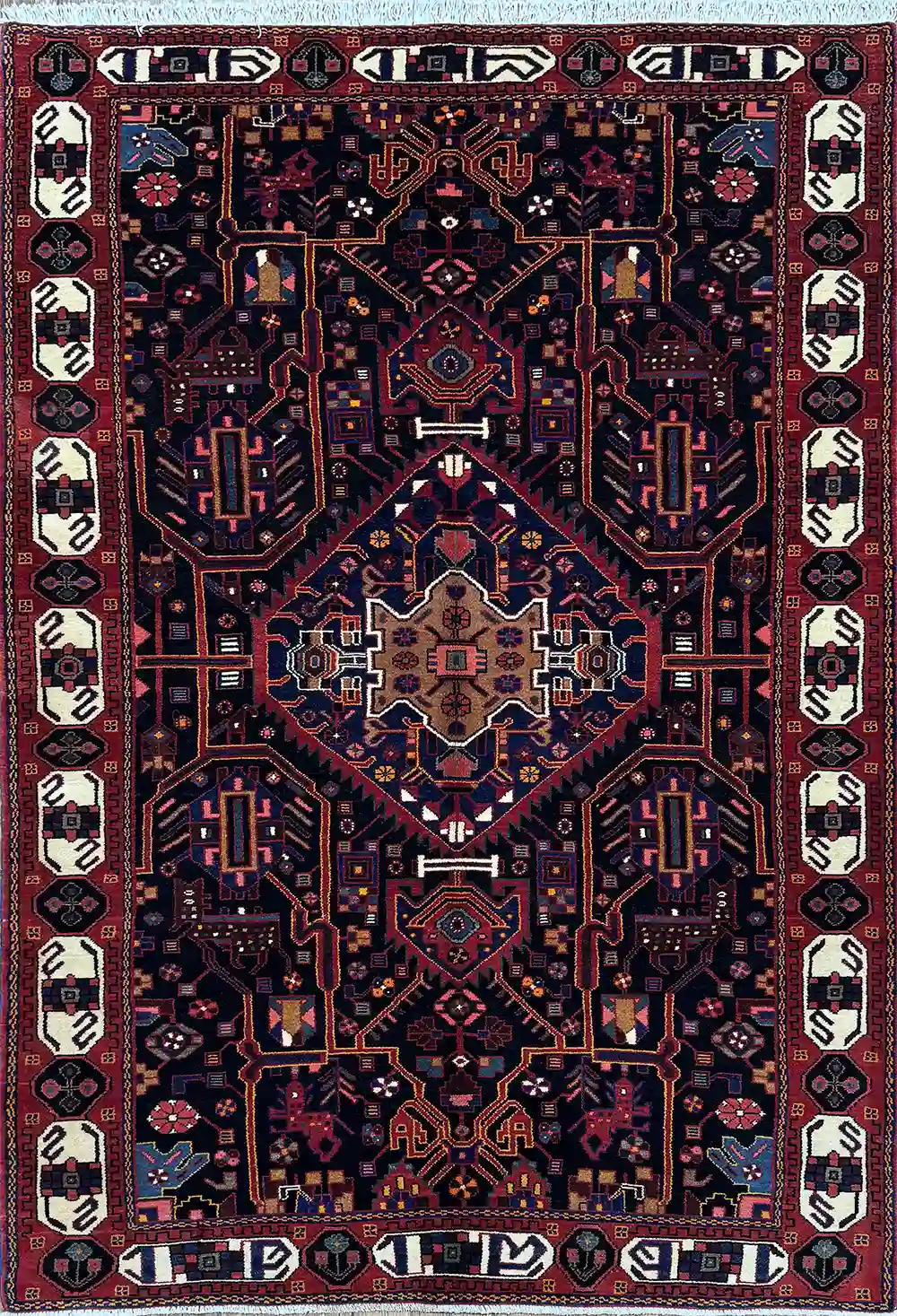
A truly exceptional Nahavand rug, known for its historic design, is considered one of the rarest and most beautiful examples of Nahavand weaving. This remarkable piece has been handwoven by skilled weavers of the Lur tribe in Iran, whose craftsmanship and cultural heritage are deeply reflected in every knot and motif. Nahavand rugs carry a quiet authenticity, and this particular example stands out as something genuinely special.
Exploring the Beauty of a Nahavand Rug
———————————
HANDMADE NAAHAVAND RUG
165CM X 275CM (5’41 X 9′)
high quality wool
Country of Origin: Handwoven in nahavand
Pile Content: Wool
Pile Thickness: 1/2″
———————————
Nahavand is a region in western Iran, historically associated with tribal and village weaving traditions. Rugs from this area are often admired for their warmth, charm, and honest artistry. Unlike highly formal workshop carpets, Nahavand rugs tend to preserve a more organic and expressive character. They reflect the daily life, environment, and cultural identity of the Lur people who weave them.
Most Nahavand rugs are traditionally woven with light-colored backgrounds — soft ivory, warm cream, or gentle beige tones combined with lively and cheerful colors. These bright palettes create a welcoming and uplifting presence. However, what makes this particular Nahavand rug so distinctive is its black background. This unusual choice immediately sets it apart from the majority of Nahavand pieces.
The deep black field creates dramatic contrast, allowing the surrounding motifs to stand out with remarkable clarity. Floral elements, geometric shapes, and tribal symbols appear more vivid and defined against the dark foundation. The contrast gives the rug a bold visual strength while still maintaining the warmth typical of Nahavand weaving. It feels powerful yet balanced, traditional yet strikingly unique.
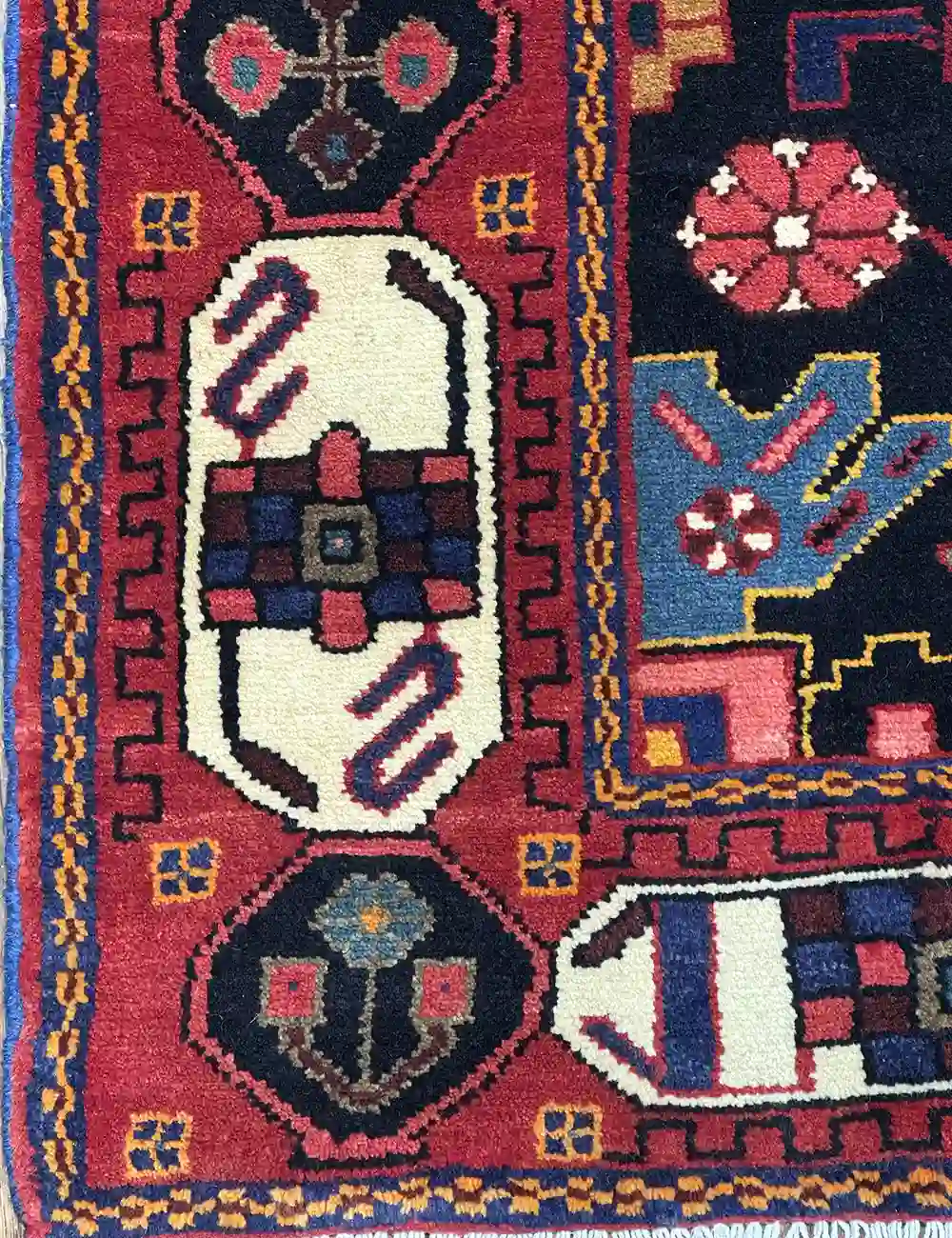
The historic design woven into this rug adds another layer of significance. Traditional Nahavand patterns often incorporate stylized floral motifs, medallion elements, and geometric framing that connect the rug to older Persian weaving traditions. In this piece, the design feels rooted in history but executed with careful attention and clarity. The motifs are arranged in harmonious proportions, creating rhythm across the surface.
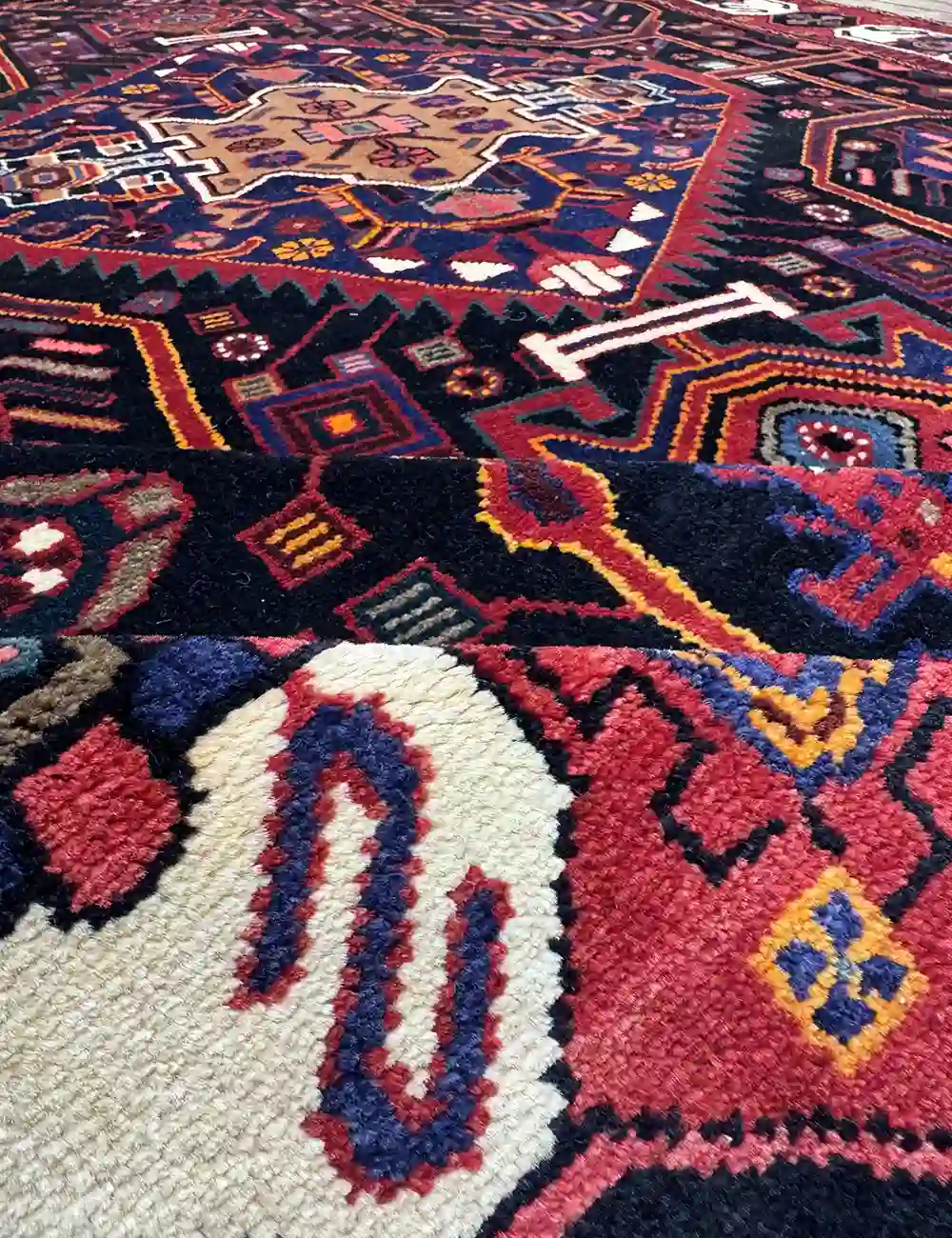
The wool used in Nahavand rugs is typically hand-spun and of high quality, contributing to both durability and texture. This rug is no exception. The wool pile feels substantial and resilient, offering a soft but sturdy surface underfoot. Over time, high-quality wool develops a natural sheen, enhancing the richness of the colors and giving the rug additional depth.
Color plays a central role in the beauty of this piece. Even with the black background, the weavers have incorporated vibrant reds, blues, greens, and subtle earth tones. These colors are often achieved using traditional dyeing methods, producing shades that feel natural and harmonious rather than overly saturated. The combination of bright tribal colors against a black field creates a sophisticated yet lively effect.
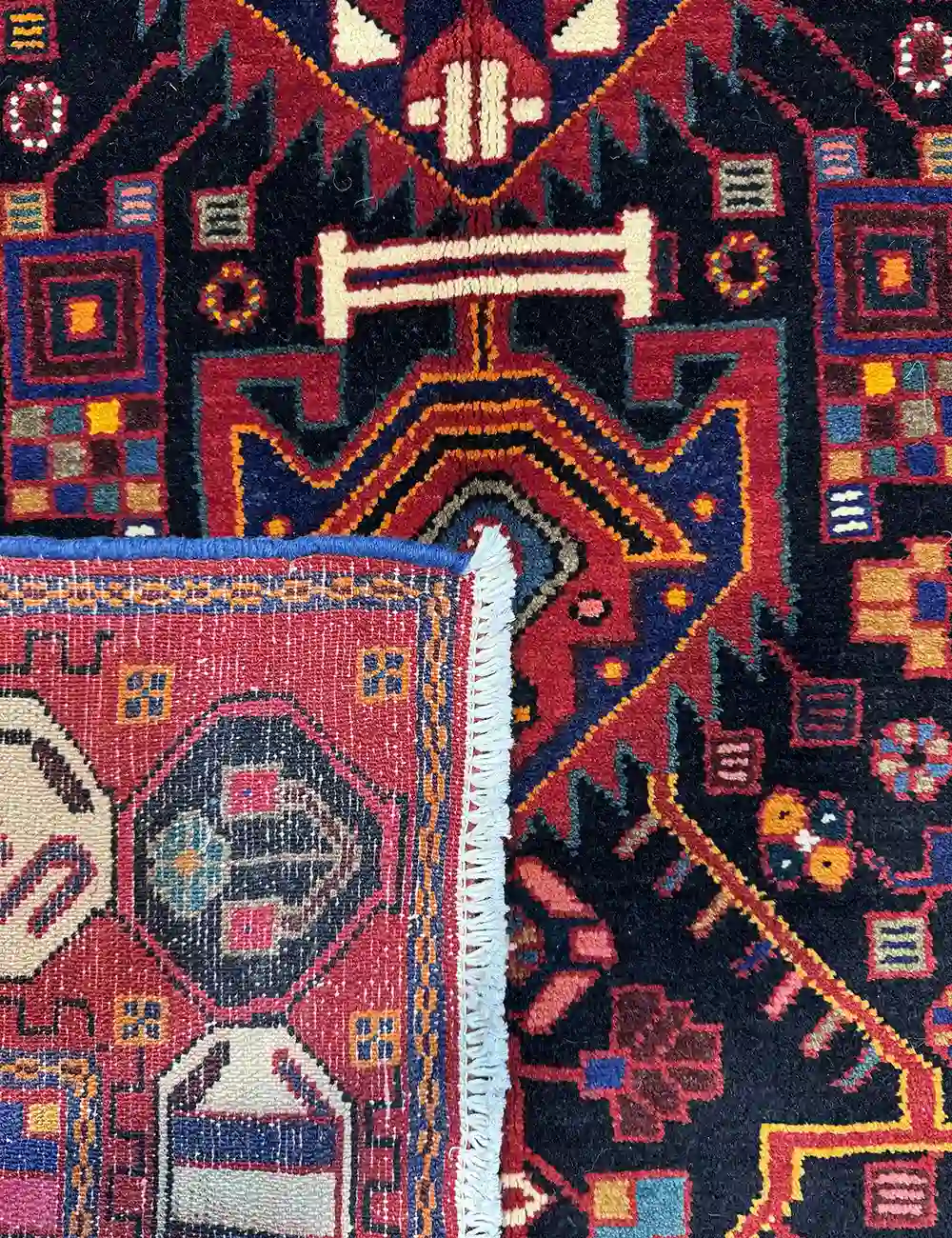
Durability is another important quality of Nahavand rugs. Woven with strong foundations and firm knotting, they are well-suited for daily use. This rug is not only decorative but functional — built to last while retaining its aesthetic appeal. The structure reflects the practical mindset of tribal weaving, where rugs were made to serve real living spaces.
Beyond technical qualities, this Nahavand rug carries cultural meaning. It represents the artistic expression of the Lur people, whose weaving traditions have been passed down through generations. Each motif and color choice reflects inherited knowledge and personal creativity. Owning such a piece means preserving a small part of that heritage.
What ultimately makes this rug extraordinary is the rare black background combined with a historic Nahavand design. It maintains the cheerful spirit and authenticity typical of the region while introducing a dramatic elegance rarely seen in similar pieces. The result is a rug that feels both grounded in tradition and refreshingly distinctive.
This Nahavand rug is more than a decorative textile. It is a cultural artifact, a functional artwork, and a rare example of how tradition and individuality can coexist beautifully in Persian tribal weaving.