WORLDWIDE SHIPPING // WEEKLY OFFERS ON INSTAGRAM



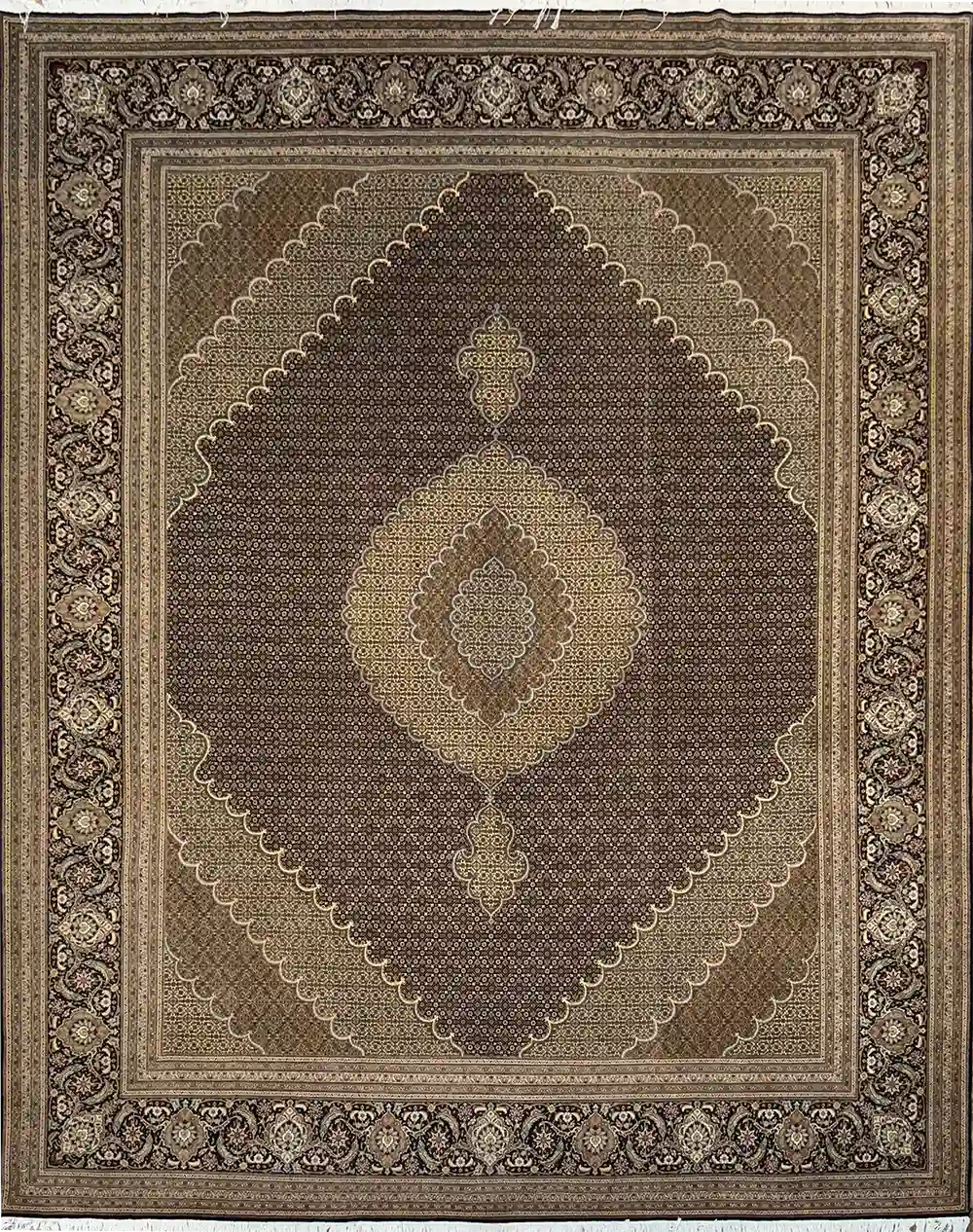
TABRIZ RUG 298CM X390CM (9′48 X 12’8)
$6,798.00
1 in stock
A Tabriz rug with the Mahi design carries a presence that is both disciplined and deeply expressive. At first glance, it feels structured and rhythmic. Look closer, and you begin to see the movement inside the pattern the quiet repetition, the subtle shifts in color, the balance between geometry and flow. The word Mahi means “fish,” and once you know that, the design almost seems to come alive beneath your eyes.
The Unique Beauty of a Tabriz Rug
———————————
HANDMADE TABRIZ RUG
298CM X390CM (9′48 X 12’8)
high quality wool & silk
Country of Origin: Handwoven in tabriz
Pile Content: Wool
Pile Thickness: 1/2″
———————————
The Mahi pattern, often recognized internationally as the Herati design, is built around a repeating diamond or lozenge shape surrounded by delicate, fish-like leaves. In Tabriz weaving, this design reaches a level of refinement that feels intentional and architectural. Each small motif is carefully measured. Each line is controlled. The repetition is not mechanical; it is precise in a way that only skilled hands can achieve.
What makes a Tabriz Mahi rug particularly special is the clarity of execution. Tabriz has long been known as one of the most technically advanced weaving centers in Iran. Weavers here are capable of producing extremely fine knotting, which allows the Mahi design to appear crisp rather than crowded. Even though the field is filled with repeating motifs, the rug never feels chaotic. There is breathing room within the density.
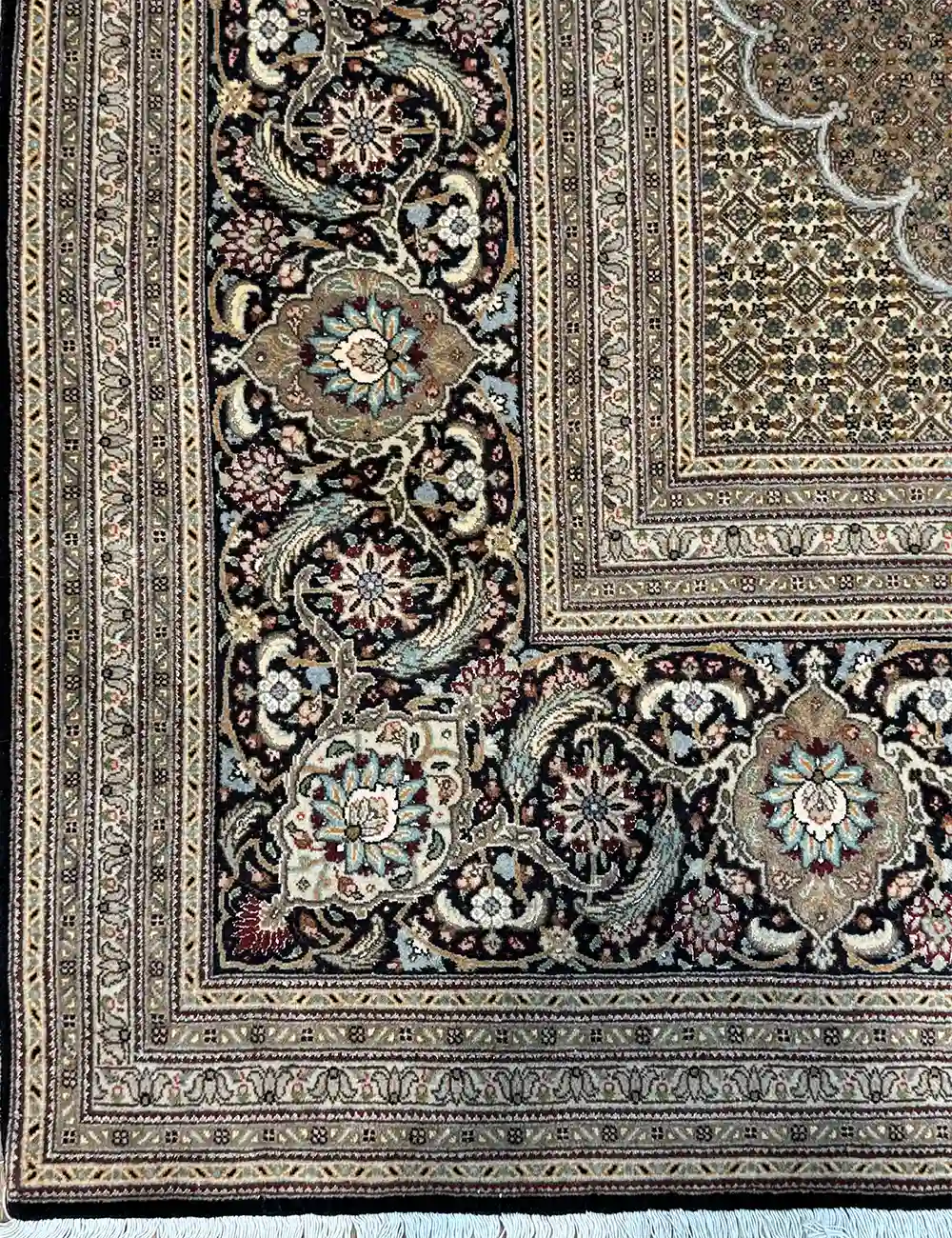
Color plays an equally important role. Classic Tabriz Mahi rugs often feature deep navy or rich red fields, contrasted with ivory, soft blue, or warm beige accents. The interplay of these tones enhances the geometry of the design. Dark backgrounds give the pattern strength and depth, while lighter grounds create a softer, more open atmosphere. In both cases, the color palette is carefully balanced to avoid overpowering the structure.
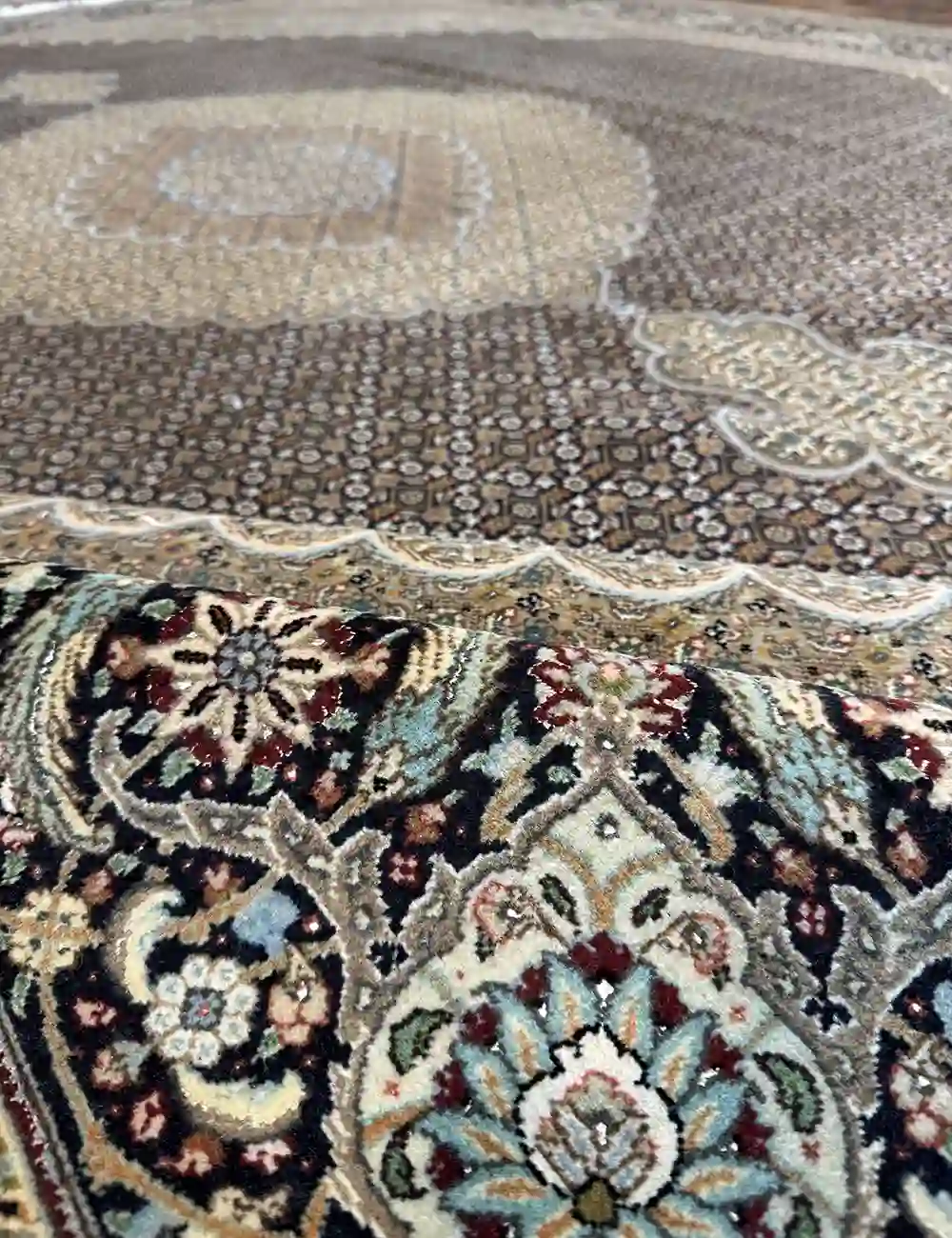
Materials further elevate the quality. High-grade wool provides durability and warmth, while finer examples may include silk highlights outlining certain motifs. These silk details are subtle, not flashy. They catch the light gently, adding dimension without disrupting the harmony of the overall composition. The combination of wool and silk creates a surface that feels luxurious yet grounded.
Unlike medallion-centered rugs, the Mahi design is typically an all-over pattern. This makes it incredibly versatile in interior spaces. Because there is no single dominant focal point, furniture can be arranged freely without disrupting the visual flow. The design supports the room rather than competing with it. This adaptability is one reason designers often recommend Tabriz Mahi rugs for both traditional and contemporary homes.
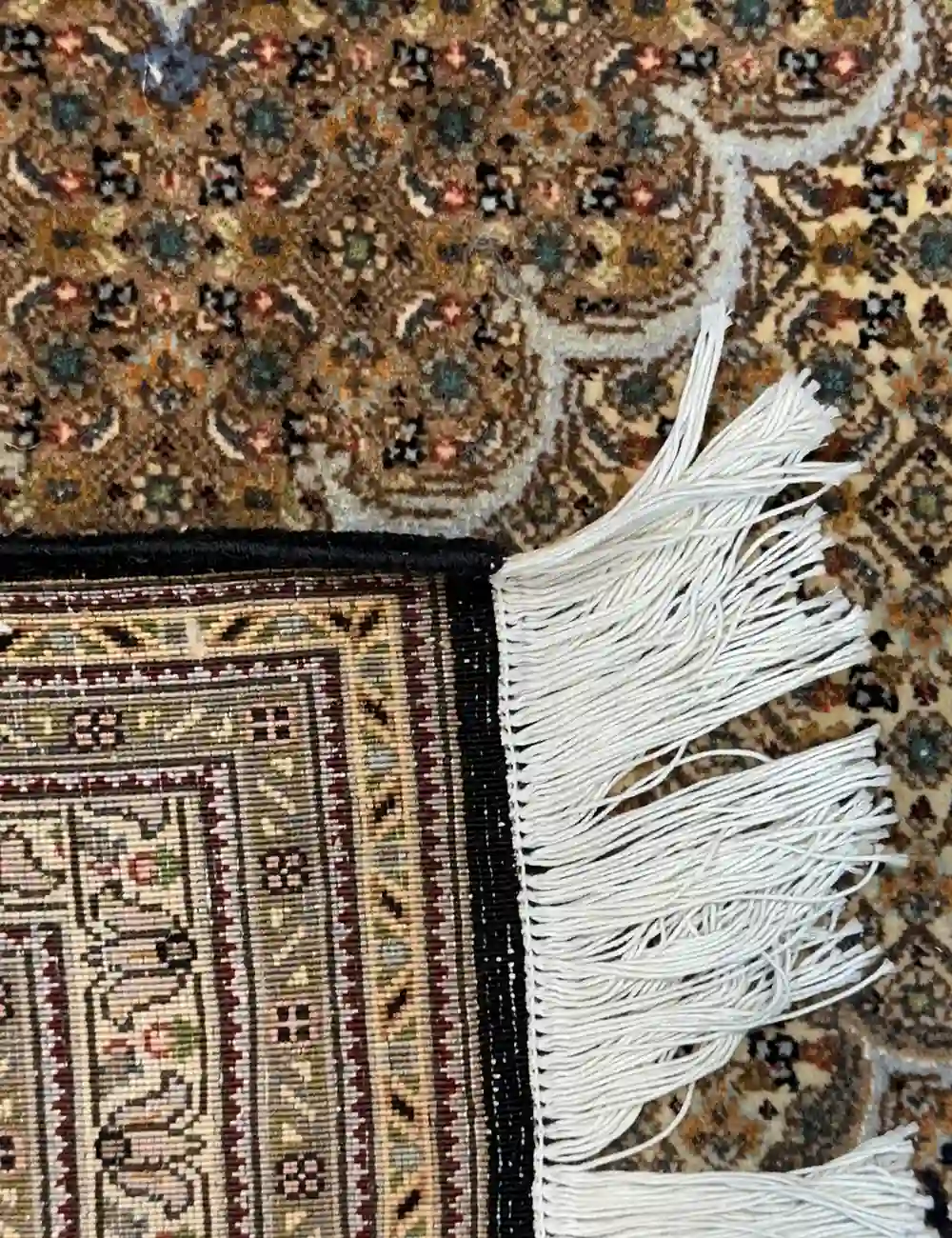
Durability is another defining quality. Tabriz rugs are usually woven on strong cotton foundations with tight, consistent knots. This construction ensures structural stability over decades of use. A well-maintained Tabriz Mahi rug can easily serve multiple generations. Over time, the wool develops a soft sheen, and the colors mellow slightly, enhancing the character rather than diminishing it.
Beyond technique and beauty, there is something deeply reassuring about the Mahi pattern itself. Its repetition creates a sense of order. Its symmetry provides calm. In a world that often feels visually noisy, the disciplined rhythm of a Tabriz Mahi rug brings quiet confidence to a space.
Collectors appreciate these rugs not only for their aesthetics but also for their reliability. The name “Tabriz” carries a long-standing reputation for quality control and artistic consistency. When combined with the timeless Mahi design, it produces a rug that feels both classic and enduring.
Ultimately, a Tabriz Mahi rug is not dramatic in a loud way. Its strength lies in refinement. It rewards attention, reveals detail slowly, and remains relevant regardless of changing trends. It is a design that has survived generations because it works — visually, structurally, and culturally.
Owning a Tabriz rug with the Mahi pattern means bringing home more than a decorative object. It means choosing structure over chaos, tradition over trend, and craftsmanship over imitation. It is a quiet statement of taste — one that continues to speak long after the first impression.