WORLDWIDE SHIPPING // WEEKLY OFFERS ON INSTAGRAM



HOME / BLOG
HOW TO TELL IF PERSIAN RUG IS HANDMADE
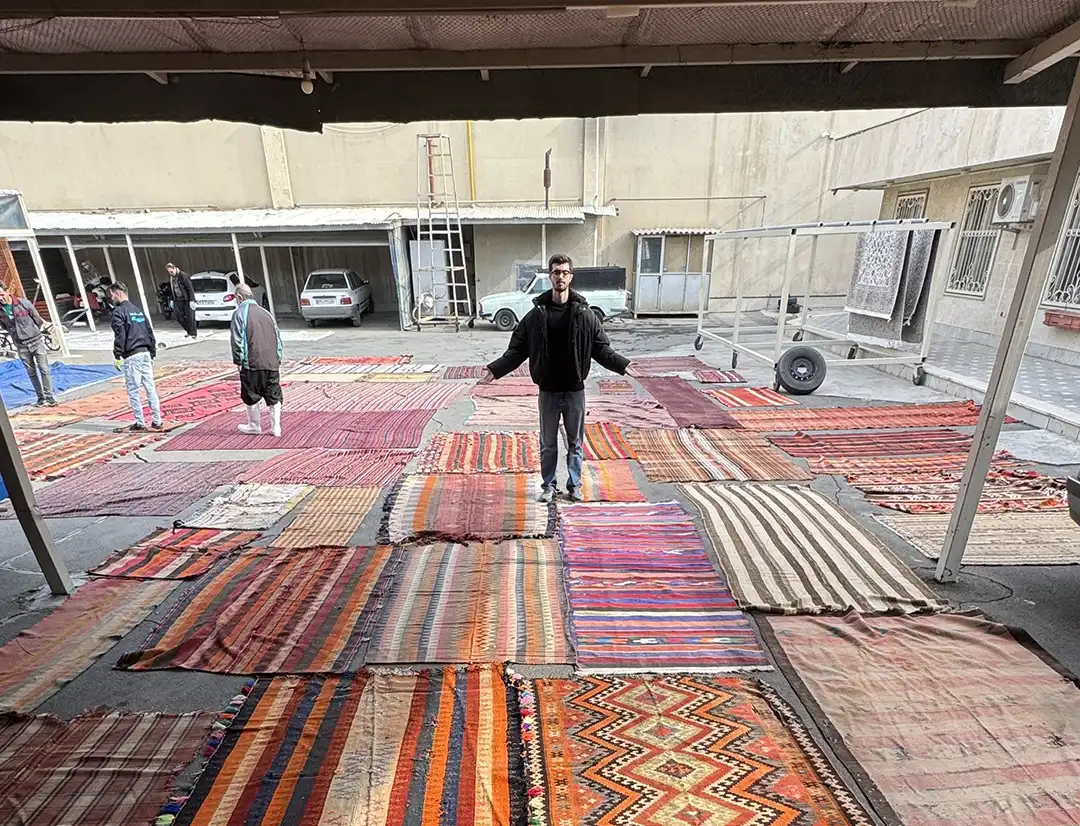
Buying a Persian rug is often seen as an investment in beauty, craftsmanship, and cultural heritage. However, one of the most important questions buyers should ask before making a purchase is whether the rug is truly handmade or machine-made. While both types of rugs may look visually appealing at first glance, there are significant differences in quality, durability, and long-term value.
A genuine handmade Persian rug is crafted over months sometimes even years by skilled artisans who tie each knot individually. This labor-intensive process results in a rug that is not only unique but also structurally superior to mass-produced alternatives. On the other hand, machine-made carpets are manufactured quickly using synthetic materials and automated weaving techniques, which may reduce costs but also compromise authenticity and longevity.
Understanding how to identify a handmade Persian rug can help ensure that you are making a worthwhile purchase. Since handwoven rugs often retain or even increase their value over time, distinguishing them from machine-made carpets is essential for anyone looking to invest in a quality piece.
In this guide, we’ll walk through the key characteristics that separate handmade Persian rugs from machine-made ones from knot structure and material quality to design details and finishing techniques — so you can shop with confidence and make an informed decision.
Check the Back of the Rug
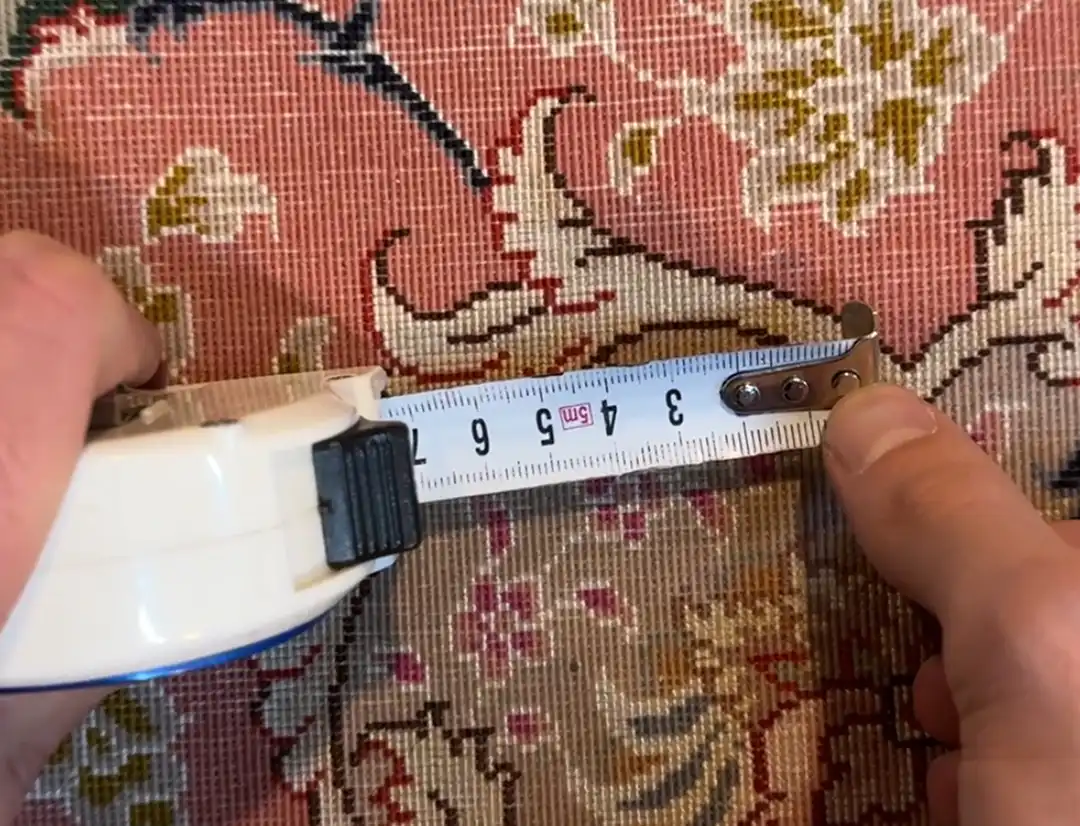
One of the easiest and most reliable ways to tell if a Persian rug is handmade is by simply turning it over and looking at the back. In a handwoven rug, the design you see on the front will also be visible on the back although slightly less vibrant. This happens because each knot is tied individually by hand, allowing the pattern to pass naturally through the foundation of the rug.
In contrast, machine-made carpets often have a backing layer or adhesive material that holds the fibers in place. When you flip over a machine-made rug, the design may appear blurred, pixelated, or even completely different from the front. Some may also have a uniform mesh or plastic-like structure underneath, which is a clear indication that the rug was produced using automated techniques.
Another detail to look for is knot irregularity. Handmade rugs are crafted by human hands, not machines, which means slight inconsistencies in knot size or spacing are completely normal and actually a sign of authenticity. These tiny imperfections contribute to the unique character of the rug and prove that it was not mass-produced.
If the back of the rug looks perfectly uniform, overly symmetrical, or identical in every section, there’s a strong chance that the rug is machine-made rather than handwoven.
Look at the Fringe
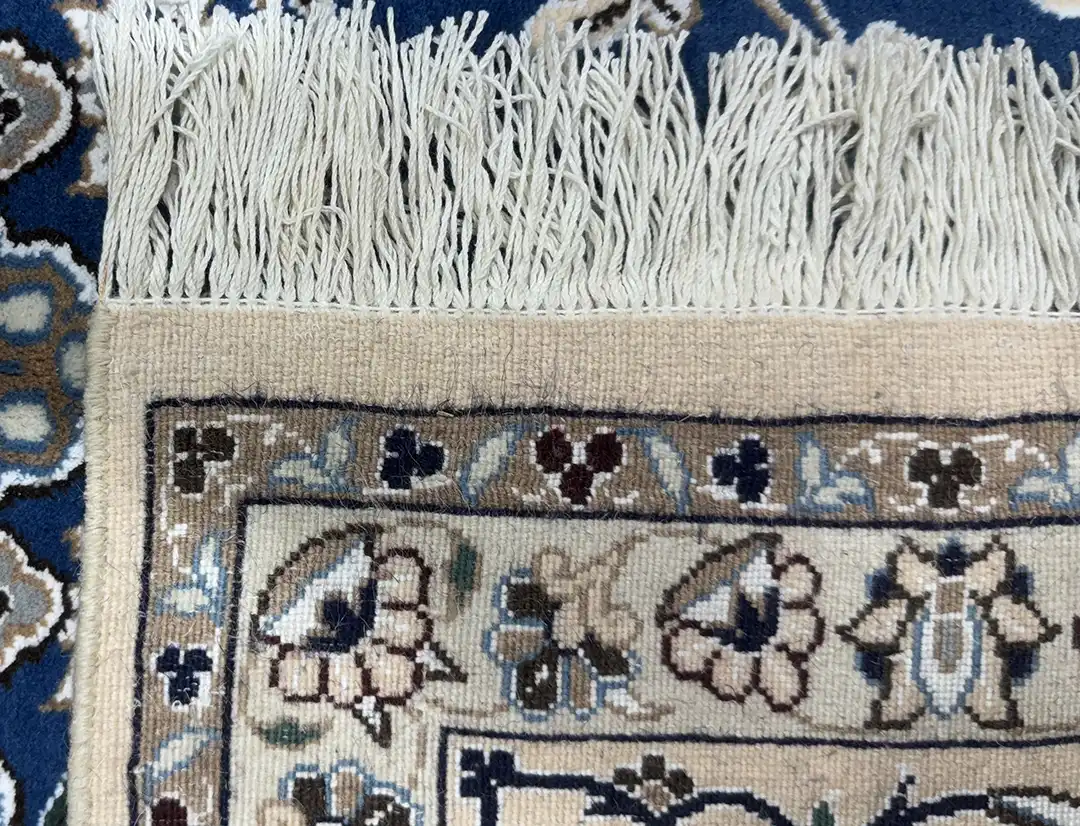
Another important detail that helps you determine whether a Persian rug is handmade is the fringe. In an authentic handwoven rug, the fringe is actually an extension of the rug’s foundation. It is formed by the warp threads that run through the entire length of the rug, meaning it is structurally part of the piece itself.
This is very different from machine-made carpets, where the fringe is usually sewn or glued onto the edges after production. In those cases, the fringe is purely decorative and can often be removed without affecting the structure of the carpet.
To check this, gently examine where the fringe meets the body of the rug. If it looks like it’s been stitched on or attached separately, the rug is likely not handmade. But if the fringe flows naturally from the weave and appears to be integrated into the rug’s construction, it’s a strong sign of traditional hand-knotting techniques.
Final Thoughts
Identifying a handmade Persian rug becomes much easier once you know what to look for. Details like the clarity of the back pattern, slight irregularities in the knots, and naturally integrated fringe all point toward authentic craftsmanship. Unlike machine-made carpets, a genuine handwoven Persian rug carries the mark of human artistry in every knot offering not just visual beauty, but long-term durability and value that mass-produced alternatives simply cannot match.