

Tabriz Rug Raj Guide: 30, 40, 50, 60 & 70 Raj
Learn what 30, 40, 50, 60 and 70 Raj mean in Tabriz rugs, how…
Article Guide
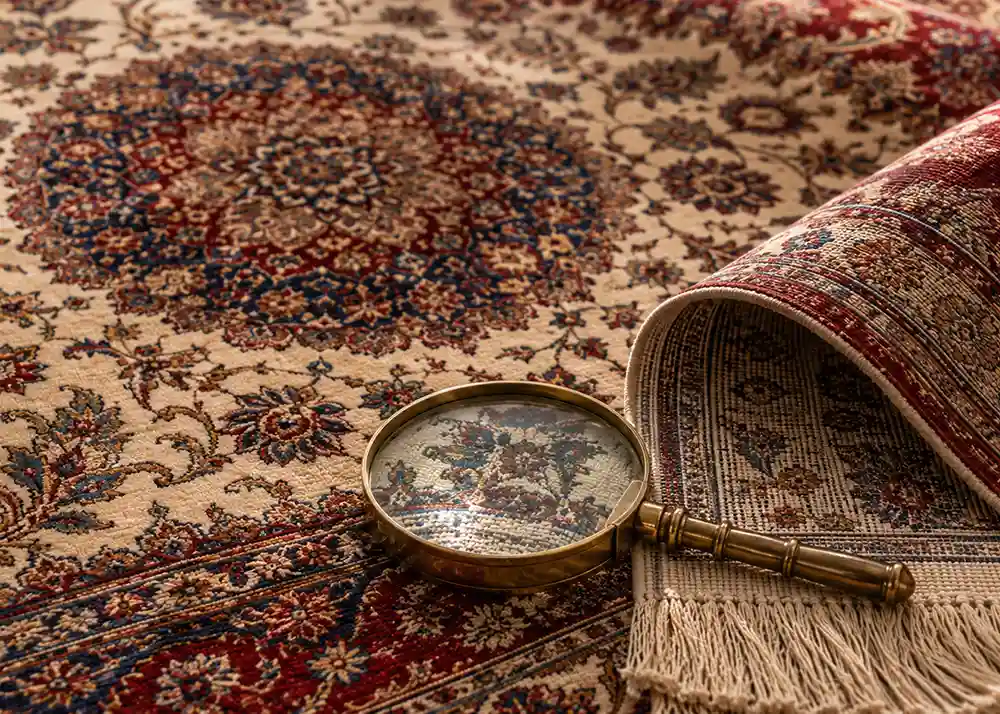
When people compare handmade Tabriz rugs, one word appears again and again:
Raj. A dealer may describe a carpet as 30 Raj, 40 Raj, 50 Raj,
60 Raj, or even 70 Raj but what do those numbers actually tell you? Raj is one
of the most useful measurements for understanding the fineness of a Tabriz rug,
yet it is also one of the most frequently misunderstood.
A higher Raj number generally indicates a finer and more densely knotted weave.
It can allow a weaver to create smaller flowers, smoother curves, more precise
medallions, and clearer pictorial details. However, Raj is not a complete
quality grade by itself. The wool, silk, foundation, dyes, knot consistency,
design, condition, and skill of the workshop all remain essential.
This guide explains exactly how the Raj system works, what the common grades
mean, how Raj relates to knot density, and how to use it when evaluating or
buying a handmade rug. For a broader introduction to the artistic reputation
of this weaving center, begin with our guide to
why Tabriz rugs are famous worldwide
.
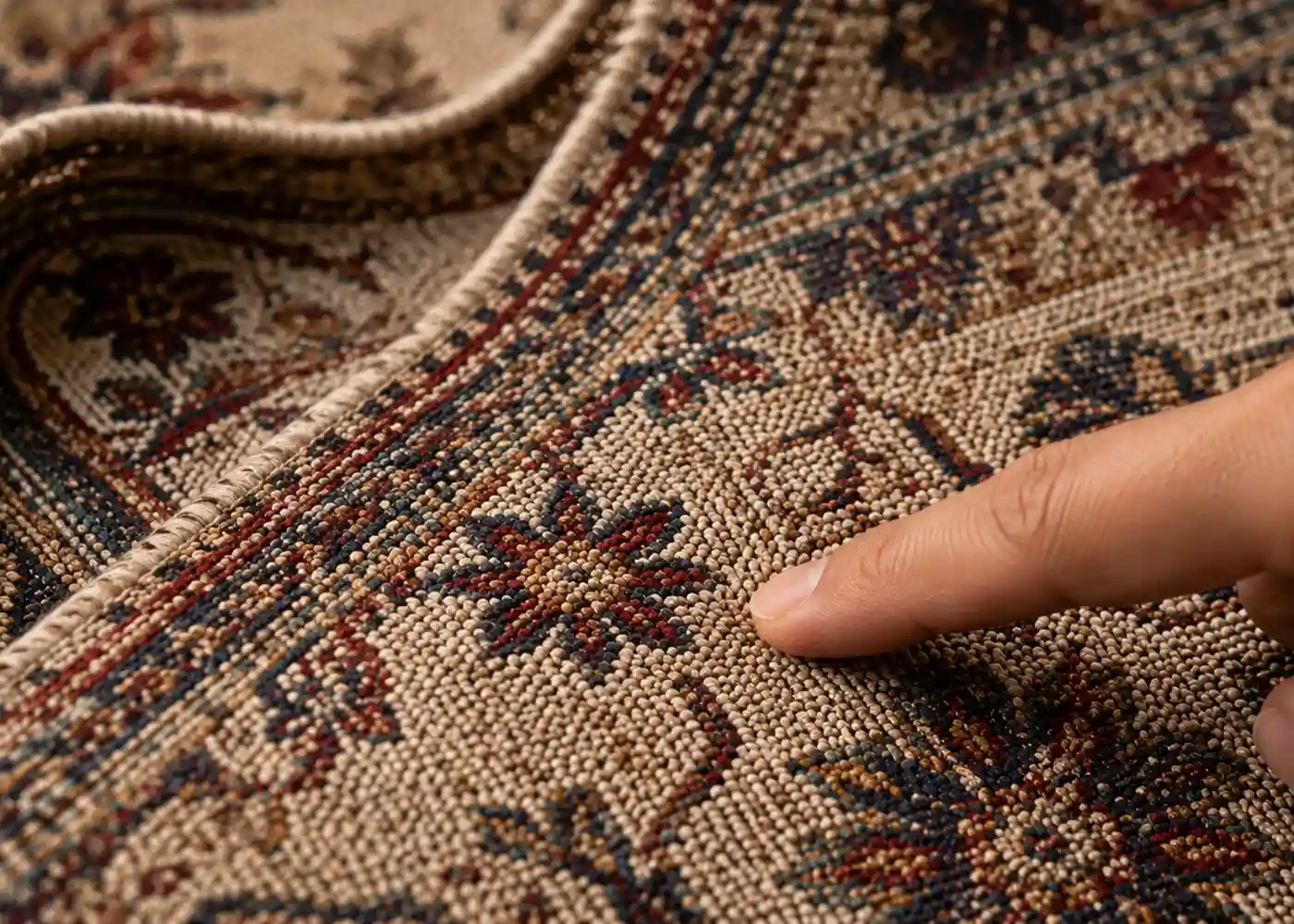
the number of knots counted along approximately 7 centimeters of the rug’s
width. A 50 Raj Tabriz rug therefore has about 50 knots across that measured
span. The higher the Raj, the finer the weave is likely to be—but a higher
number does not automatically make one rug more beautiful, durable, authentic,
or valuable than another.
What Does Raj Mean in a Tabriz Rug?
Raj is a traditional unit used to communicate the fineness of many Tabriz
carpets. Instead of describing density only in knots per square inch, the
weaver or dealer counts knots across a short linear section, traditionally
close to 7 centimeters. That measurement is deeply associated with the Tabriz
market and remains a familiar way to distinguish ordinary, fine, and
exceptionally fine weaving.
The important point is that Raj is a linear count, not
automatically a complete square-area count. A statement such as “50 Raj” tells
you how many knots appear across the chosen span. It does not, on its own,
confirm the exact number of knots per square meter because the number of rows
in the other direction may not be identical. The rug’s structure, warp
spacing, compression, and counting method can all create variation.
That is why reputable descriptions should treat knot-density conversions as
approximate. Raj is extremely useful for comparison, especially between
Tabriz rugs, but it should be considered alongside a physical examination of
the back, pile, foundation, edges, materials, and overall execution.
Raj Compared with KPSI and Knots per Square Meter
International rug buyers often use KPSI, meaning knots per
square inch. European and metric markets may use knots per square meter. Raj
can be converted into an approximate area density when the horizontal and
vertical knot spacing are reasonably similar.
Approximate knots per square meter = (Raj ÷ 0.07) × (Raj ÷ 0.07)
For example, 50 knots across 7 centimeters gives roughly 714 knots per linear
meter. If the vertical density is similar, multiplying 714 by 714 produces
approximately 510,000 knots per square meter. This is a theoretical estimate,
not a substitute for counting both directions on the actual rug.
| Raj Grade | Approx. Knots per m² | Approx. KPSI | General Visual Character | Typical Position |
|---|---|---|---|---|
| 30 Raj | About 184,000 | About 119 | Stronger outlines, larger motifs, less minute detail | Practical and accessible handmade quality |
| 40 Raj | About 327,000 | About 211 | Clear floral forms and balanced detail | A popular balance of refinement and usability |
| 50 Raj | About 510,000 | About 329 | Fine curves, crisp motifs, sophisticated drawing | Widely associated with fine Tabriz weaving |
| 60 Raj | About 735,000 | About 474 | Very fine outlines and complex ornament | High-grade workshop production |
| 70 Raj | About 1,000,000 | About 645 | Exceptional precision and miniature-like detail | Rare, labor-intensive, collector-level fineness |
Note: These figures are mathematical approximations based on equal
density in both directions. Actual rugs may measure differently, and sellers
may publish somewhat different ranges. The most reliable evaluation comes
from counting horizontal and vertical knots directly on the back of the rug.
What Is a 30 Raj Tabriz Rug?
A 30 Raj Tabriz rug has a comparatively open weave within the Tabriz spectrum.
That does not mean it is machine-made, poorly made, or inauthentic. It means
the design is built with fewer knots across the standard measurement, so the
drawing usually relies on larger shapes and more pronounced outlines.
Thirty Raj can work especially well for bold medallions, broad floral
arrangements, geometric interpretations, and room-size rugs intended for
practical use. The pile may feel more substantial, while the pattern is
usually easier to read from a distance. Because fewer knots are required for
the same area, the weaving process may be less time-intensive than it is for
a 50 or 60 Raj carpet of similar dimensions.
A well-made 30 Raj rug can be attractive, durable, and culturally authentic.
Its value depends on much more than fineness: high-quality wool, harmonious
colors, good proportions, consistent knotting, and a well-executed design can
make it far more desirable than a technically finer rug with weak materials
or uninspired drawing.
What Is a 40 Raj Tabriz Rug?
Forty Raj is often considered a highly practical middle ground. It provides
enough density to render curved vines, floral borders, medallions, and
repeating Mahi or Herati structures with good definition, while still
offering the substantial character many buyers want in a usable floor rug.
For many homes, 40 Raj is not a compromise. It can be the ideal balance between
visual refinement, durability, price, and everyday practicality. A
well-composed 40 Raj carpet can look elegant in both traditional and
contemporary rooms, especially when its colors and scale suit the architecture.
This grade is also useful for understanding why buyers should never evaluate
Persian rugs by a single number. Two 40 Raj rugs may differ greatly in wool
quality, pile height, color clarity, foundation, symmetry, age, workshop
standards, and condition. Raj tells you about fineness; it does not tell the
entire story of craftsmanship.
What Is a 50 Raj Tabriz Rug?
Fifty Raj is commonly associated with fine Tabriz weaving. At this level, a
skilled workshop can draw narrower outlines, smaller petals, more continuous
arabesques, and cleaner transitions between colors. Intricate medallions
become more articulate, and all-over patterns can appear dense without
becoming visually confused.
Many high-quality 50 Raj rugs combine wool pile with silk highlights. The silk
may be used selectively to emphasize flower edges, medallion details,
inscriptions, or parts of a Mahi pattern. However, silk is not required for a
rug to be 50 Raj. Raj measures knot fineness, while fiber content describes
the materials used.
A 50 Raj rug often appeals to buyers who want visible technical refinement
without moving into the rarity and cost associated with the finest workshop
pieces. When the wool is lustrous, the knotting is consistent, and the design
is well balanced, this grade can offer an impressive combination of artistic
detail and long-term usability.
To understand the wider tradition behind this level of craftsmanship, read
our detailed introduction to
handmade Tabriz rugs and Persian weaving
.
What Is a 60 Raj Tabriz Rug?
A 60 Raj Tabriz rug enters a notably finer category. The dense foundation
gives designers and weavers a much larger visual vocabulary. Tiny blossoms,
delicate leaves, precise outlines, complex corner elements, and subtle changes
in line can all be represented more convincingly.
Because the pile must not hide the drawing, very fine rugs are often clipped
relatively short. This can make the surface feel smoother and the pattern look
sharper. Buyers sometimes mistake a short pile for wear, but these are not the
same thing. Intentional shearing is even and supports design clarity; wear is
usually irregular and may expose the foundation in high-traffic areas.
Sixty Raj weaving demands excellent control. Minor inconsistencies become more
visible when the pattern is highly detailed, so the quality of the workshop
matters greatly. Materials also become increasingly important: fine wool must
be strong enough to spin thinly, and silk foundations or highlights may be
used where the design requires extra precision.
What Is a 70 Raj Tabriz Rug?
Seventy Raj represents exceptional fineness and is much less common than 30,
40, or 50 Raj. Under the equal-density approximation, it approaches one
million knots per square meter. Producing a large rug at this density requires
enormous time, concentration, technical discipline, and material preparation.
At 70 Raj, the surface can support miniature-like drawing. Faces, feathers,
inscriptions, architectural elements, fine Mahi structures, and layered
floral compositions can be rendered with remarkable precision. These rugs are
often created as prestigious workshop pieces rather than purely functional
floor coverings.
Still, a claimed 70 Raj label should be verified. Exceptional numbers can be
used as marketing language, and counting errors are possible. A serious
evaluation should inspect several areas of the back, count both directions,
examine whether the knotting is consistent, and confirm that the stated
fineness is representative of the whole rug.
Does a Higher Raj Always Mean a Better Tabriz Rug?
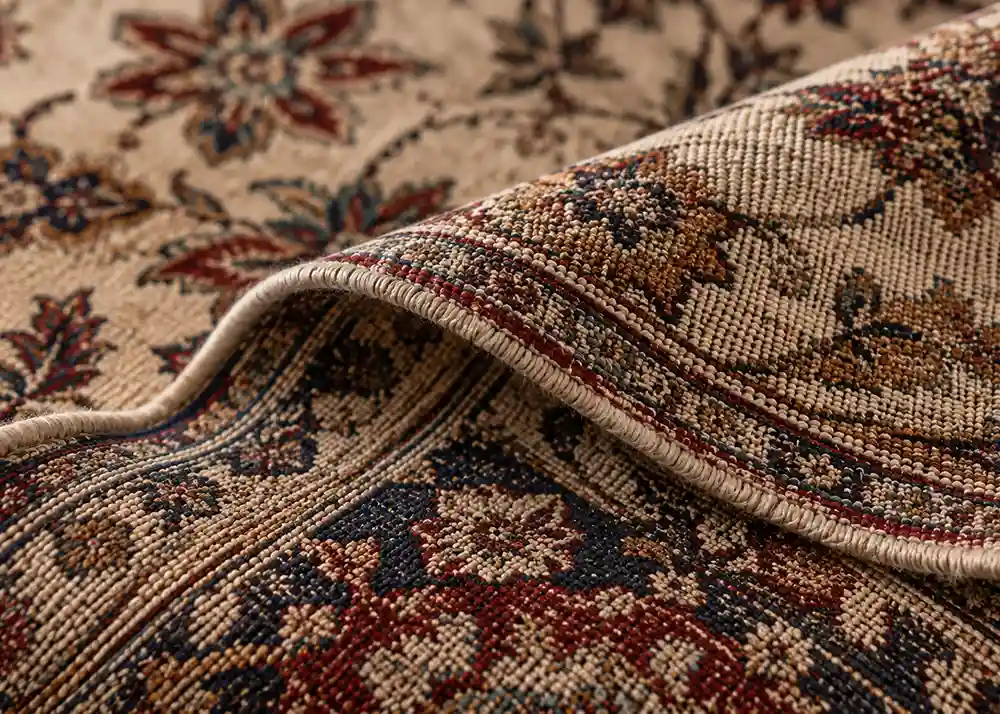
No. Higher Raj means greater potential for detail, but quality is
multidimensional. Consider the difference between a technically perfect
drawing made with weak fibers and a slightly coarser rug woven from excellent
wool with beautiful colors and a powerful composition. The second rug may be
more durable, more attractive, and more valuable to a particular collector.
When judging a Tabriz rug, evaluate the following factors together:
- Material quality: Fine, resilient wool and genuine silk
can improve clarity, texture, and longevity. - Knot consistency: Even spacing and controlled tension
matter as much as the published Raj number. - Design execution: Curves, borders, corners, medallions,
and repeating motifs should feel balanced and intentional. - Color: A sophisticated palette and stable dyes can give
a rug depth that knot count alone cannot create. - Foundation: Cotton and silk foundations behave differently
and influence fineness, flexibility, and value. - Pile condition: Examine wear, low areas, stains, moth
damage, and repairs. - Age and provenance: Older rugs may be valuable for rarity,
workshop history, color, or artistic character even when their Raj is lower. - Restoration: Professional restoration may preserve a rug,
while undisclosed or poorly executed repairs can reduce desirability.
Raj is therefore best understood as one chapter in the rug’s biography—not the
final verdict.
How to Count Raj on a Tabriz Rug
You can make a preliminary Raj estimate at home, although a professional
assessment is preferable for expensive, antique, or unusually fine carpets.
- Turn over a clean section of the rug. The back reveals the
knot structure more clearly than the pile side. - Choose an undamaged area. Avoid edges, repaired sections,
heavily worn areas, and places where the structure is distorted. - Place a metric ruler across the width. Mark a span of
approximately 7 centimeters. - Use good light and magnification. Fine rugs can be
difficult to count accurately with the naked eye. - Count full knots, not random color specks. Depending on
the structure, one knot may show one or two visible elements on the back. - Repeat the count in several locations. Handmade rugs can
vary slightly, and one small section may not represent the entire carpet. - Count the other direction as well. This allows a better
estimate of KPSI or knots per square meter.
Raj is especially associated with the Tabriz trade. Other weaving centers may
use different systems, terms, or conventions. For context on regional
differences, see our
complete guide to Persian rug styles and types
.
How Raj Changes the Look of a Tabriz Rug
The visual effect of Raj is easiest to see in curved and highly detailed
patterns. In a lower Raj rug, a flower may be represented with a few broad
color blocks. In a finer rug, the same flower can include a narrow outline,
individual petals, internal shading, and tiny surrounding leaves.
The same principle applies to medallions. Greater density allows the border of
the medallion to remain smooth rather than stepped. In Mahi patterns, the
small leaves and diamond structures can become more distinct. In pictorial
pieces, higher density makes expressions, clothing, architecture, and
inscriptions easier to recognize.
However, viewing distance matters. A 70 Raj rug may reward close inspection,
while a bold 30 or 40 Raj carpet can have stronger visual presence across a
large room. The best choice depends on whether you want miniature detail,
architectural impact, daily durability, collector interest, or a combination
of these qualities.
Does Raj Determine the Price of a Tabriz Rug?
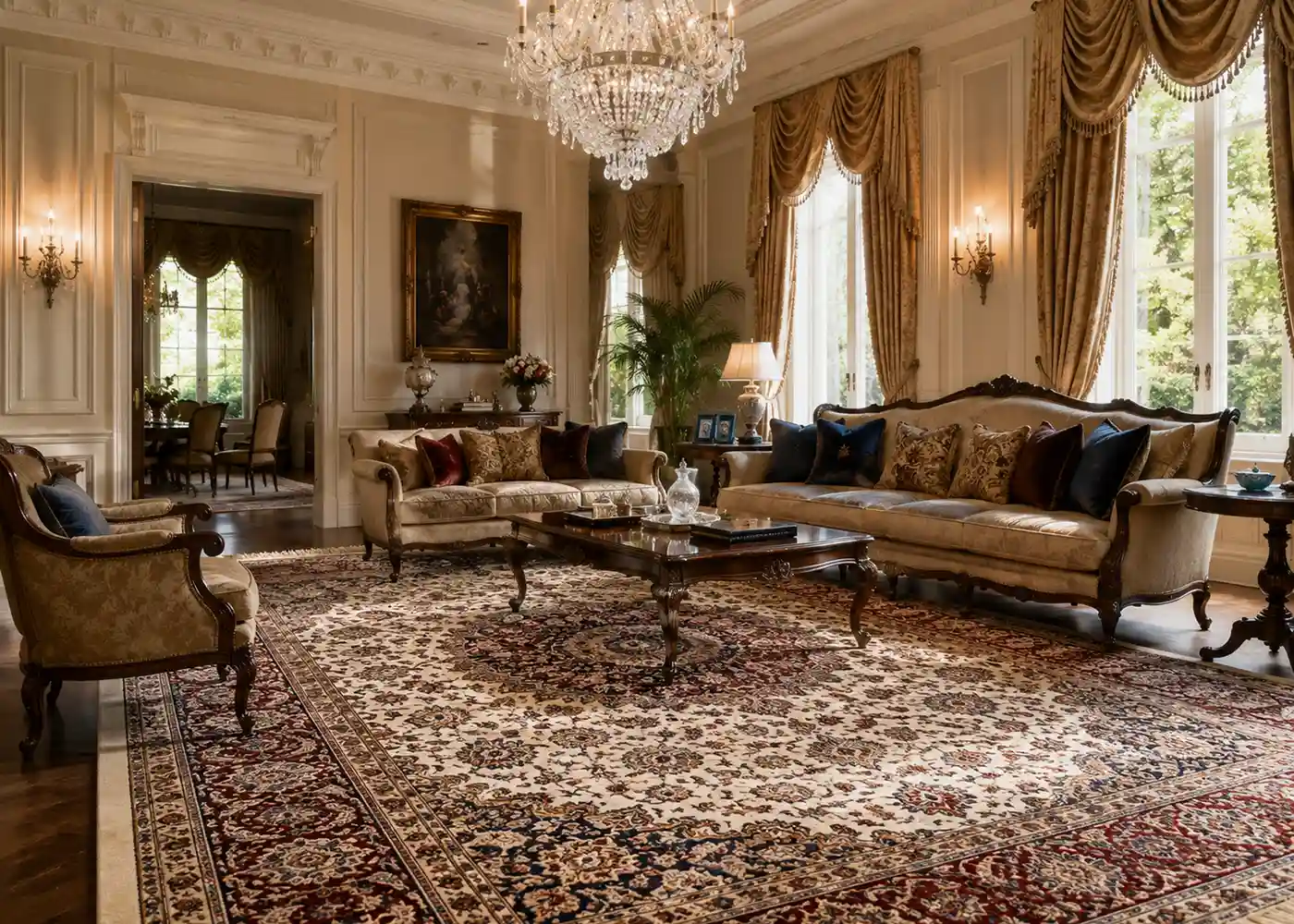
Raj influences price because finer knotting usually requires more labor. A
60 Raj rug of a given size may require substantially more knots than a 40 Raj
rug, extending the weaving time and demanding greater control. Fine yarn
preparation and detailed design work can add further cost.
Yet price does not rise according to a simple Raj formula. Size, materials,
workshop, age, rarity, condition, color, subject, commercial demand, and
restoration all affect value. A rare semi-antique Tabriz rug with beautiful
vegetable colors may command more interest than a newer rug with a higher Raj
number but less artistic distinction.
Buyers interested in older pieces should browse the
old and antique rug collection
and compare condition, materials, design, and character—not only knot density.
Which Raj Is Best for Your Home?
There is no universally best Raj. The correct choice depends on how the rug
will be used and what you value most.
- Choose 30 Raj when you appreciate bold drawing,
substantial texture, and practical handmade character. - Choose 40 Raj for an excellent balance of detail,
usability, and visual clarity. - Choose 50 Raj when fine floral drawing and sophisticated
workmanship are priorities. - Choose 60 Raj for very refined workshop weaving and
close-up detail. - Choose 70 Raj when rarity, technical achievement, and
collector-level fineness justify the additional cost.
For an active living room, a strong wool rug with balanced density may be more
appropriate than an extremely fine silk-rich piece. For a formal room or
private collection, finer Raj and delicate materials may be highly desirable.
Whatever the grade, proper care matters. Avoid harsh chemicals, aggressive
brushes, excess moisture, and unqualified cleaning methods; our guide to
seven handmade rug care mistakes
explains the most common risks.
Questions to Ask Before Buying a Rug Described by Raj
Before relying on a seller’s number, request enough information to understand
the complete object:
- Was the Raj counted directly, or copied from an old label?
- Was it measured across approximately 7 centimeters?
- What are the horizontal and vertical knot counts?
- Is the number consistent across multiple areas?
- Is the pile wool, silk, or a combination?
- Is the foundation cotton or silk?
- Has the rug been repaired, reduced, recolored, or re-piled?
- Are clear photographs of the front, back, fringes, corners, and low-pile
areas available? - Is the rug genuinely woven in Tabriz, or merely described as Tabriz-style?
A trustworthy seller should be comfortable discussing these points and should
not present Raj as proof of origin, age, or overall value.
Frequently Asked Questions About Tabriz Rug Raj
Is 50 Raj good for a Tabriz rug?
Yes. Fifty Raj is generally considered a fine level of Tabriz weaving and
can support precise floral, medallion, Mahi, and curvilinear designs. The
final quality still depends on the materials, knot consistency, drawing,
colors, and condition.
Is a 70 Raj rug always made of silk?
No. A 70 Raj rug may use wool, silk, or a combination, and it may have a
cotton or silk foundation. Raj describes fineness, not fiber content. Very
fine spinning and strong materials are necessary, but the number alone does
not prove that the rug is silk.
Can a 30 Raj Tabriz rug be valuable?
Absolutely. A 30 Raj rug can be valuable because of its age, rare design,
excellent wool, natural colors, important workshop, large size, condition,
or provenance. Lower knot density does not automatically mean low artistic
or market value.
Can Raj prove that a rug is handmade?
No. Raj is a way of describing fineness. Authenticity requires examination
of the structure, knots, fringes, foundation, edges, materials, and
manufacturing characteristics. A numerical claim alone is not proof.
Why do different websites give different knot counts for the same Raj?
Some sources use rounded ranges, while others calculate equal density in
both directions. Actual carpets may also have different horizontal and
vertical counts. Measuring conventions, structural compression, and
counting errors create additional variation.
Should I buy the highest Raj I can afford?
Not necessarily. Buy the rug whose design, colors, materials, size,
condition, and intended use suit you best. A harmonious 40 Raj wool carpet
may be a better choice for your home than a delicate 70 Raj piece that
requires more careful use.
Final Thoughts
Raj gives buyers a valuable window into the technical fineness of a Tabriz
rug. Thirty Raj tends to produce bolder and more open drawing; 40 Raj offers
balance; 50 Raj enters fine weaving; 60 Raj supports highly refined detail;
and 70 Raj represents exceptional labor and precision. But the smartest
evaluation never stops at the number.
Look at the rug as a complete work of art and craftsmanship. Study its
materials, colors, drawing, knot consistency, foundation, pile, condition,
age, and restoration. When Raj is interpreted in that larger context, it
becomes a useful tool rather than a marketing shortcut.
Explore Handmade Tabriz Rugs
Compare designs, materials, sizes, and weaving character across our curated
selection of authentic handmade pieces.